Katy: [00:00:00] I just love hyping people up, Matty. I just love it. Have I told you you’re doing great? Because you are.
Matty: It’s time for Arrested DevOps, the podcast that helps you achieve understanding, develop good practices, and operate your team and organization for maximum DevOps awesomeness. I am joined today with, I would say, a cast of thousands, but it’s not thousands, but for an ADO episode, it might as well be. And we’re going to be talking about my personal favorite virtual event of all time, Deserted Island DevOps. But before we get into that, let’s have a word from our sponsors.
Rootly helps engineers manage incidents directly from Slack without ever needing to leave the tool. They handle all the boring and tedious manual work during incidents, like creating channels, looping in the right people, and acting as your scribe to document that ever-important timeline. Companies from 20 to 2,000 manage hundreds of incidents daily on Rootly. It’s super simple and easy to use. You can install it in 5 minutes or less. Visit rootly.io to learn more and mention Arrested DevOps for $1,000 off when you book a demo. The role of a developer or engineer has evolved into a security-first mindset. The ability to confidently build and deliver your software assets across the globe while also avoiding supply chain threats is a priority for organizations to remain successful. Cloudsmith is software supply chain management for modern DevOps practices. They provide a single source of truth for all software assets while integrating with the package formats your team is used to. With a focus on securing your software supply chain, Cloudsmith is truly at the heart of your DevOps ecosystem. To learn more and receive a firsthand look at their solution, please visit arrestadevops.com/cloudsmith.
[00:02:02] BridgeCrew is the all-in-one cloud security platform for developers. They automate and embed security throughout the entire development lifecycle so you can streamline your DevSecOps toolchain into one solution. By integrating infrastructure as code security and compliance into your version control systems and CI/CD pipelines, BridgeCrew empowers you to find, fix, and prevent cloud misconfig faster. Get started with BridgeCrew for free at arresteddevops.com/bridgecrew.
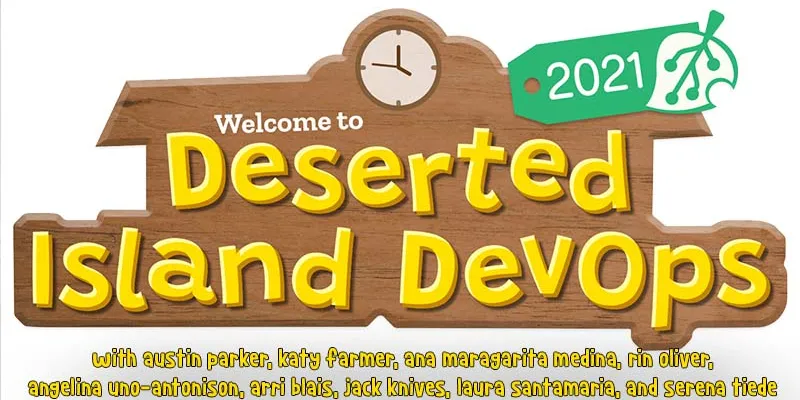
So recently we had the second incarnation of a fantastic virtual conference called Deserted Island DevOps. And I’m joined by 9, count them, 9 guests today who were speakers and organizers of this event. So before we get into it, let’s have everybody, why don’t you introduce yourself to our guests?
Austin: Hello, I am once again Austin Parker, Developer Advocate at LightStep and organizer of Deserted Island DevOps.
Katy: [00:03:07] Oh, hello, I’m Katy. And I am a technical community manager at CircleCI, MC of Deserted Island DevOps, and a general hype woman in Animal Crossing.
Ana: My name is Ana Margarita Medina. I am a senior chaos engineer at Gremlin, and I was super honored to be speaking at Deserted Island DevOps.
Rin: My name is Rin Oliver. I’m a technical community builder at Camunda, and I was also very excited to be speaking at Deserted Island DevOps.
Angelina: Hello, I’m Angelina Uno-Antonison. I work as a software architect for the Center of Computational Genomics and Data Science at the University of Alabama at Birmingham School of Medicine. I’m very excited to be talking about such an amazing conference.
Arri: Hi, I’m Arri Blais. I’m a senior software engineer at Embark Vet, and I was very excited to teach everyone about bridges and ramps with accessibility. At Deserted Island DevOps.
Jack: [00:04:07] I am Jack Knives. I am the lead DevOps engineer at Moda Operandi, and I’m just here to stan Aurora, my favorite villager.
Laura: I’m Laura Santamaria, LogDNA’s developer advocate, and I was one of the speakers at Deserted Island DevOps talking about the dangers of third-party tooling, and I am so excited to talk about it today.
Serena: And I am Serena Tiede, an SRE at UnitedHealth Group. And I was excited to talk about making friends with tracing.
Matty: Everybody’s so excited. This is exactly what we want on a podcast episode.
Austin: It’s an exciting group.
Matty: It is an exciting group. So, uh, before we kind of get into this, Austin, this is the second year. Maybe, maybe we’ll talk a little bit, uh, you know, regular listeners of ADO, uh, might recall the background of Deserted Island DevOps, but This started last year as an event basically from some, you know, making jokes on Twitter about having a conference in Animal Crossing, which turned out to be one of the best virtual events of 2020. What about this year? Like what, what was different maybe in your mind?
Austin: [00:05:20] The reaction last year was, you know, extremely positive. And we had a great turnout. And I think what drove me to do it was mostly, uh, here’s a good, here’s a pro tip for everyone that has trouble sticking to things. It’s announce that you’re going to do something way ahead of time so that when it gets closer and the fear of failure like overwhelms and consumes you, you can’t, cause you’ve like told people you’re going to do it. That’s a really good strategy that worked out super great for me this time. I think the basic idea is the same, right? Like if you want to know more detail about the history, then last year’s episode, last year’s kind of ADO on this covered a lot of it. And the thought was the same, you know, let’s, let’s take the same idea. Let’s do a virtual event in a deliberately constrained virtual space.
Jack: Right?
Austin: And in doing so, use those constraints to sort of inspire creativity in our speakers and how we present and how we think about what is a virtual conference? What is a conference? And I always like to think that we took a lot of learnings from last year. We upped the production value quite a bit, I think, in terms of artwork. In terms of sort of the other associated things, like we, you know, we, we had merch this year. Um, I think one thing that we did last year that we expanded upon was the idea of doing this for a cause. So last year we had shoutouts where people, speakers would kind of shout out a charity. And this time we decided to make it into an actual fundraiser and have a campaign, a giving campaign to The Trevor Project, which is a charity for at-risk LGBTQ+ youth. So during the event, you know, people could give to that charity and we had a little tracker and, you know, it was fun, right? Like, but nothing really changed, I think, in terms of the idea. You know, it’s, hey, what is an event? Why is an event a good— what makes an event an event? That, that I think is the question that we’ve— we’re still trying to answer in a lot of ways because It wasn’t, it wasn’t the hit that I thought it would be, right? Like, I, I expected more people to show up. Uh, we can talk about that more later if you like, but I think we all had a good time, and I think we had super high-quality talks, and we raised over $6,000 for, you know, trans kids. So that’s pretty good.
Matty: [00:08:02] We don’t necessarily have to turn this episode into the DI DevOps retro, but you know, it could happen. Stranger things have happened. Katy, like when I think about, especially this year, for some reason, I don’t know why it didn’t feel quite the same, is during the event, you are very much the face and personality of Deserted Island DevOps because, you know, Austin’s kind of running around and, you know, producing and doing whatever. And I think having that personality come through as an emcee just for any event is really important, um, to the feel. But I, I think it was really strong in, in this event. And how do you, how do you approach something like that?
Katy: I just am so excited all the time. I have to take deep breaths. Uh, it’s such a wonderful gift to be able to introduce people who are talking about things they’re passionate about in a community event. It just brings me so much joy, and I don’t have an off mode. So this is a very good, like, way for me to channel a lot of the things I have going on into, into a good, healthy space. And I just love hyping people up, Matty. I just love it. Have I told you you’re doing great? Because you are. And I just, uh, I don’t know, I’m really— I feel really lucky to be able to be on the island and help people feel welcome and warm, um, because that’s what makes me feel— it makes me feel great. I feel energized at the end of the day instead of exhausted because everyone is just such a pleasure.
Austin: [00:09:44] And you, you had the one of, I think, the, the best innovations this year was the, um, the dedications line.
Katy: You know, when I was a kid, I really wanted to be a radio DJ, and that dream didn’t come true, but I can make it happen still, it turns out, by letting people shout out their friends and loved ones in one of the Discord channels and then putting on my best radio voice to, uh, to read their comments aloud. If I could have— look, if we could afford songs, I would have done full requests.
Austin: That’ll be a good bit for next year.
Matty: Reminds me of being in junior high and calling up the radio station to dedicate a Richard Marx song to someone I had a crush on.
Katy: Yes, that’s exactly what I wanted. I wanted people just to feel that, you know, it’s like even when you’re just listening to those on the radio, like when I was a kid and you would like hear the dedications and you’d be like, ooh, someone’s gonna feel good because they got this song. Like, I kind of wanted that feeling to come through.
Austin: [00:10:45] And it’s Casey Case— Katy Caseum.
Matty: Katy Caseum. Katy Caseum.
Katy: How did you know my DJ name?
Austin: Lucky guess. We’ve worked on— we’ve worked together on this stuff enough.
Matty: So Anna, you were a first-time speaker at Deserted Island DevOps this year, and I think I recall relatively newcomer to Animal Crossing. I think it was a few months ago. I remember seeing you tweeting about that. Tell us a little bit about what your talk was about, but like how you approach, because you’re, you know, like many of us, do a lot of conference speaking. This is a little different, you know. How did, how did this feel different?
Ana: It felt different in so many ways. Part of it definitely was that I didn’t hop on Animal Crossing in March of the 2020 year. I didn’t get my hands on a device until I want to say November, December of 2020. So I always felt like I had less time to learn what my controls are, make my island a little bit more beautiful. But once I got accepted to be able to speak on here, it was this much excitement. It was like, I know how much this helped me survive and be entertained, like, during hard nights in the pandemic. So being able to tune into something that was special to me, but then be creative and be able to say, wait, I learned something from this. Some of the skills that I’m actually using in this game should completely cross over into my daily life, into the bigger world of engineering and DevOps. So I actually had a really hard time coming up with an abstract. And after I came up with an abstract, the outline that I built did not tie into my talk at all. I was very, very close on doing the talk mostly about DevOps, about reliability, talking about ways that we can create stuff when you get stung by a bee. And then I kind of realized that I wanted to zoom out a little bit more. And I wanted to talk about some of the interpersonal stuff where we are learning how to be better humans, how to build community, how to talk to your neighbors and care for one another, especially in times that we’re not seeing other people. So our neighbors being like, hey, I haven’t seen you in a week, where have you been? That is like the same love that I sometimes get going into the office when I’ve been traveling. It’s like, hey, how was PTO? I haven’t seen you. So being able to think about that was something that really made me rewrite the beginning of my talk. And then getting a chance to be, to share that portion where there’s so much to learn as an engineering leader, as an engineering IC, that you can do work every single day to build more trust and safety within your team by building relationships. But then how that actually applies into the reliability space of you wanna go ahead and explore, You wanna go ahead and lean on one another. And at the same time, you end up learning things about consistency and maybe you wanna have redundancy and you learn that your net is gonna break and that you’re not gonna be able to break the rock that you need to get your little Nook Miles. So you’re like, well, it’s 9 o’clock, let me go prepare and buy 2 axes ’cause I’m gonna go hunting tonight. So I think thinking of ways like that really tie in for me on the reliability space.
Matty: [00:14:12] One thing I, I was thinking about a little bit, basically because someone— I had someone watching one of the talks and they were like, wait, what are bells? What are whatnot? Like, when I remember last year, it didn’t even occur to me when I wrote my abstract and started to put together to tie it to Animal Crossing at all, because it was sort of like DevOps stuff. And then in the speaker chat, people were starting to share their slides and it was like, oh, Okay, and I think everybody kind of stepped up. Um, but it— and also I remember spending a lot of time in Animal Crossing trying to capture the exact right, um, conversations with, with, uh, with villagers, you know, with island residents to get the point I wanted to get across. So I’m curious to think about like, how do you, when you’re doing a talk for something like this, keep it like— be able to keep the inside baseball in there for the people who are really into Animal Crossing but keep it still accessible to people who maybe don’t know all that stuff?
Ana: Yeah, I actually ended up setting the stage of like, what is it that we learned and covered that within 5 minutes where it’s like, we learned that we need to take care of our plants, care about our neighbors, be able to have consistency on stuff. And then that really allowed for me to like open up that talk to be like, all right, I already told you what I learned, but how is it that the things I learned is something you can actually start implementing in your life? As part of self-care, as part of checking in on other people, and later went ahead and like implemented that to engineering teams and making the cloud more reliable. And being able to tie those things, I think it’s that really beautiful part of public speaking where you really get to think about all the experiences you’ve had, whether they’re in the game or whether they’re in real life, and be able to storytell on ways to make the world, internet, a little bit better.
Matty: [00:16:05] Rin, I want to talk about your talk. Your talk was around community and resilience, and resilience is a very true-to-home topic for a lot of us over the last however many year and a half or, or whatnot. What are, what are some of the, the key things you were trying to communicate through this conversation?
Rin: Mainly that resilience is something you have to work at, but you also have to be kind to yourself as well. And a lot of people think that resiliency means that you’re never going to experience pain, you’re never going to be distressed. Resilience means that you just have the tools to handle that in a way that suits you best. And by building resilience, you can better adapt to stressful situations and challenges. And it’s something you have to work at. Like Roald, I have Roald on my island and he’s a villager that loves to work out. And I think resilience is like crushing a workout. You get— if you— the more you do it, the more you’re used to building that resilience, the better you get at it. So I think that’s really important to remember is that we’re all in this together and we all have to just be kind to each other.
Matty: [00:17:06] I really like that, that resilience is around intentionality, right? And I think we always see different ways it gets expressed and thinking about reliability versus resilience and resilience coming from, from the people. Is this, topic, was this something kind of a new topic for this event? Or have you been talking about this in other venues?
Rin: This was a new one for this event for me. I actually hadn’t given this particular talk before. So this was a new one. And I really, I really liked it. And I got to talk about how we can build a community through building resiliency and how we can use those skills to foster connection in digital communities as well. And such as like in Animal Crossing, you bring people together online. There’s a variety of MMOs, there’s all kinds of fun things you can do with your community. And I think that it’s all— it’s about intentions, but you can also see, you know, what can you do that’s out of the box? What can you do to make things fun and collaborative, especially in these sort of times? How can you bring people together while not being together?
Matty: [00:18:11] One of the things I always like to hear from— and I’ll, I’ll sort of imply the same question to everybody when we get to you— is if you’ve participated either as a speaker or an attendee in other virtual events over the last year or so, like, what’s like one thing that really stood out that made this a really different experience? Uh, hopefully a really positive experience.
Rin: I really liked that it was in Animal Crossing. It was unique. It was somewhere that you don’t see an event happen, and most of them are just Zoom, you’re live streaming. This was actually, you’re on a Twitch stream, you’re actually getting to play Animal Crossing, you get to see everyone else’s avatars, and it was a nice way to still see people and be like, oh, there’s other people in this room. And it was all decorated and it was really fun. It felt like a little conference hall, except it was in Animal Crossing. It was pretty great. I liked it a lot.
Matty: Angelina, um, you had a pretty dense technical topic that you, that you took on and then put it into Animal Crossing. So what was that? Well, tell us a little bit about what you were talking about, why I said that, but What was that like to sort of take that deep technical content and make it about Animal Crossing?
Angelina: [00:19:24] Well, I spoke on Apache Kafka, which is a distributed streaming technology. And so the reason why I chose to theme it with Animal Crossing is we was trying to find a way to help expose a bunch of people to a technology that seems like used across our industry a ton, but to not be so intimidating. Like, all these tech giants use this super fancy technology, and how can I introduce it to people where it doesn’t seem so fancy and large, right? So we have a— at the university I work at, we have a monthly meeting called ShareOps where we meet with the high-performance compute. We invite computational biologists, And I’m like, what is a way I can make them care about something and make it seem easier than it is and trick them? And so it was really great. So I themed it, and I knew Deserted Island DevOps was coming up, and I’m like, ooh, I’m having a real burnout right now. I used to love speaking at conferences and giving talks, and at this point in the pandemic, it was just— I felt like I didn’t want to do that anymore. I didn’t want to speak to people. I didn’t want to talk to people. And I was like, this isn’t me. And I’m like, what can I do to, one, make it accessible and enjoyable to people who have no clue what the heck I’m talking about, who do stuff with biology and things that I don’t actually care about in a way? And so my friends were joking also at work saying, oh, well, you know, putting video game references isn’t professional. And I’m like, well, I’ll show them.
Jack: [00:21:00] Screw that.
Angelina: This is my talk. I do what I want. And they have to listen to me for an hour. But not a whole hour. So that’s kind of where I was like, I was playing Animal Crossing, getting into it. My daughter is now starting to play, and I’m like, why don’t I just theme an example with one of the games I’m playing? So it was either Dragon Quest Builders or Animal Crossing, and I like, I like Animal Crossing. I’m enjoying Animal Crossing. Not as many people get Dragon Quest Builders. So that’s kind of why I chose that way, and it kind of challenged me because then I put a limitation I’m like, I have to explain all these things, but then use assets essentially from a video game.
Matty: So that actually made me think of kind of an interesting question that I haven’t, I haven’t really thought about with the talk I gave last year, which was, I do have a non-Animal Crossing version of it, but what about taking the content that’s built for this and using it for something else, you know, in with the Animal Crossing theme and all of that? I wonder especially with a talk like yours that was using that to really break that down. Do you think you’ll be giving this talk again somewhere?
Angelina: [00:22:10] I think I will. I wasn’t sure before the conference, but based on the feedback I got, I think I’ll actually continue using it. Coming up with the idea of how to explain how the streaming API works and then just how Kafka works in general with a dinner party theme worked way better than I imagined. And so yeah, first I wasn’t, but based on the conference feedback from being on Discord and then going back in the Twitch stream and seeing folks react, and I was like, oh, this is something I can continue to use because I think it turned out really well. I didn’t anticipate it to work out that well, but I’m glad it did.
Matty: Talking about how taking an idea like that and distilling it down and presenting it that way is a way of making these concepts accessible. So Ari, we were talking a little bit about how this event maybe made these ideas accessible, maybe kind of where that came in. Like, what are your thoughts about that?
Arri: You know, accessibility as a broad concept, it’s always good to make things easier for every single type of person to use. And I think that that’s something that Angela’s talk did a bit of, where you took this very complicated concept that maybe people who don’t have as much background in DevOps might not have understood a lot about. And I think that’s sort of a similar thing to what I sort of try to do when I’m designing websites and front-end frameworks, where I want to make sure that people can use them. And this includes things like internal tools and stuff.
Matty: [00:23:48] Maybe just kind of catch everybody up on what your talk was about and maybe what you were trying to communicate and why this was a good venue for that.
Arri: Yeah, so I was trying to teach people about like how to sort of get started with accessibility advocacy on your team because a lot of things that I’ve noticed is not that people don’t want to make their tools accessible, it’s that they don’t know how. They don’t know how to get started. Mine was starting with a very high-level idea of this is how you can get started and this is how you can try to begin making your company think a lot more about how to make things accessible. One of the reasons why I liked Desert Island DevOps for this talk is because one thing that stood out to me last year was that there were a lot more sort of like soft skills talks. There were talks about like, here’s how to build, uh, like communication between teams, here’s how to make empathetic teams. You know, it wasn’t just, um, here’s— it wasn’t just like tech stuff, it wasn’t just a purely tech conference, it was about people as well.
Matty: [00:25:08] I think that’s, uh, that’s, that’s pretty key, pretty accurate. And I I feel like that continued this year, but there was also a lot of really— I don’t want to say meaty stuff because like the, the people stuff is meaty too, but again, you had like— and just talk, right? Like, which is like, okay, we’re gonna get into this, right? Or really stuff that— yeah, it was, it was very diverse in terms of content, which I really, really enjoyed. Good, good job, program committee. Pat yourselves on the back.
Arri: Yeah, I actually do think it’s really awesome when you have a mix of different types of talks because some someone can show up at a conference and they’ll always get something out of it.
Matty: It’s, it’s interesting. Like I’ve, I’ve thought about this a little bit and virtual makes this a little bit harder, but I feel like the experience of Desert Island DevOps is one that people want to experience throughout versus just sort of popping in and out. But I used to say, this is one of the reasons I always loved single-track conferences back in the olden days of doing conferences in person is it’s like, okay, you know, we’d have the, like what I would say were like the eat your vegetables talks, which is great. Okay. You want to get to that Kubernetes talk? You got to sit through the testing talk first. You know, because people aren’t going to just get up and leave the hall, you know, and some people might, but you know.
Arri: [00:26:19] I actually sort of like think a little bit differently about that because whenever I go to multi-track talk conferences, I sort of feel like, oh no, I have to go to this talk, but that means I’ll miss this other great talk. And if it’s a single track, you can just see all of them.
Matty: Well, that’s also why I like single track too. I just like single track in general. So Jack, um, what was, uh, maybe your favorite part of participating in this event?
Jack: Um, well, this is, uh, my first like speaking opportunity at something that was like not just to fellow coworkers. So that was really exciting. Um, and just the community itself was super welcoming, helpful. If I needed help or like a second opinion, people were right there. Waiting to help me.
Matty: Yes, massive, massive props for doing such a really great job for your first talk. I didn’t want to kind of cue up to that, figured we’d get to that. But, um, also the bad news I have for you is that this is not, uh, necessarily a typical experience as a speaker as far as how well the organizers take care of you. So some are better than others.
Jack: [00:27:29] That’s like— I sort of felt like in that sense it was like a great first talk because it’s like, I don’t want to say training wheels, but it’s always good for your first experience in a given thing to be a great experience. So it gives a little buffer for any future not-so-great experiences I might have.
Matty: One of the things, and I’d like to hear what you think about it, especially if your first experience with this, and I talked about this in one of the things that really stood out to me so much about Deserted Island DevOps was how connected the speakers are with each other. And that was almost a little bit— not to take credit away from Austin, but I feel like it was a little accidental with this idea of, oh, I guess you can all just hang out in the Zoom together all day. And then everybody did. And it made it so awesome. I don’t know if that was like, you know, kind of a plot.
Austin: This year or last year?
Katy: Well, last year.
Matty: I know you knew about it.
Austin: I would say it’s one of those things, retroactive continuity. It was always part of the plan.
Matty: [00:28:32] Yes, of course.
Austin: The, the one thing that actually turned out to be very deliberate that’s to this point about first-time speakers that I’ve— everyone on this call knows, they’ve— I’ve told them, but we didn’t even think about it last year. We just did it. It’s the introductions where we don’t read off people’s bios in the introductions. We ask for the fun facts. And the reason that we do this is because there is— and like, Jack is a first-time speaker at, you know, a public event. Well, you know, you’re gonna get a mix, right? You’re gonna get people that come first-time seekers. Some people have been doing this for literally years and have 2 paragraphs of bio, you know, or a page of bio. So you want something that’s equitable, right? Because otherwise the audience might say like, oh, this person doesn’t know what they’re talking about or whatever. So if you just give everyone the same intro, then you’re kind of, uh, removing a little bit of that implicit bias. So it’s the little touches, little touches like that. I think we are fairly deliberate about, which is cool.
Matty: I, I want to— and Jack, I want to get back because I’m going to ask you a little more about this, but there’s something Austin said reminded me, uh, and this is a lesson I think for us to learn again even in the in-person events, is for DevOps Day Chicago, we, um, kind of decided that we weren’t having the MC— again, to sort of what Austin said— having the MCs do intros anymore, short of having the AV person just introduce with name as, as you walked out. And part of that was because it— even as much as you try not to, you’re the MC. You know some people, some people you don’t, right? And so it’s going to be like, oh, well, Anna and I go way back, so I’m going to crack a joke, or I’m going to make a thing. I’m going to, you know, be like, oh, I remember when we first met at whatever. And then there’s another speaker who I don’t know, and I just introduce them by name. And none of it’s intentional, but it doesn’t create kind of that, uh, that standard. So I think that’s a really good, really good point. Um, so Jack, what was, uh, you know, prepping for your first, first big talk like? How, how did you kind of go about, uh, especially doing it in this maybe atypical way?
Jack: [00:30:37] Um, well, I will say that like when I first made my, um, talk proposal, it was like a throwaway. I was like, oh, there’s like no way I’ll get accepted. I’ll just like come up with something real fast. And then submit it, and then I’ll never have to think about it again. Naturally, when I got the email that I was accepted, I was like, that’s not right. And so I waited for like— eventually I was like, all right, like, this is really happening. I have to sit down and figure out what I’m at, what my abstract is actually going to be, because I came up with it in like 2 minutes and then had spent like 2 solid weeks of like writing rough drafts, um, doing, uh, dry runs for people. Um, I spent an hour fiddling around in GIMP because I wanted to see if I could make like custom slide patterns. Um, so, you know, I just went from like the whole like from soup to nuts. Like, I, I think I prepared myself for, for future adventures pretty thoroughly.
Matty: [00:31:41] Is there one thing in your talk that you are like When you’re like, that is my— yes, I am so proud of that particular thing the most.
Jack: So when I said Blathers was the developer because he’s afraid of bugs, I came up with that line and I was just like, I don’t even have to give the rest of the talk. I could just say that line and then walk off and it would be great.
Matty: That’s the key to all great talks. And front-load it so then you can just coast the rest of the talk from the good vibes of your great initial joke.
Serena: Exactly.
Matty: Yeah. So, uh, Laura, um, you, uh, had the interesting, uh, self-imposed challenge of speaking but also deciding to live tweet the entire event. Uh, I did a great job.
Laura: Thank you. It was a lot of fun. It’s just I find that I pay attention a lot better and This one was more of a challenge than I normally do when I live tweet because I wanted to show off everybody’s, like, how they looked and how they did their slides. And I wanted to show everything off. So like, I’m frantically trying to get screenshots and Austin keeps moving around the camera and I’m just trying to get it so I can get everybody in. So it was really funny just trying to nail all of like the really interesting shots as well as the really important bits from everybody’s talk. It was a lot of fun.
Austin: [00:33:07] I want to point something out. I want to point out a lesson learned.
Katy: Um, improve your camera work.
Austin: No, next time tell people which side of the screen to stand on and don’t just let it— don’t leave it to fate. Because I had built all of the scenes assuming that people would be standing, uh, to the relative left, and Chloe started and stood on the relative right. And then everyone mirrored what Chloe was doing. And so if you were watching live or you’re watching— if you go back and watch on YouTube, you can see like I’m furiously like panning the camera around trying to, you know, get some part of Chloe into frame. And then eventually I’m just like, okay, I, I have to like adjust these scenes around in OBS. So that, that’s why. And then everyone kept doing the same thing, so good on y’all for—
Matty: did you just get lucky last year?
Austin: Uh, last year it was— we, we changed— there was a couple of like big tweaks to the, uh, display. One was last year the slide inset was much too small. It was, it was made it very hard to read a lot of the slide text. And so when I kind of went through and did the speaker, and when I went through and accepted everyone and we do an AV check, I was like, hey, you know, Make your text a little bigger, like—
Matty: [00:34:26] oh, because you did a— so people had an experience of doing it before the event.
Austin: So, right. Well, and also like the— because I remember from last year we made the overlay like a little bit bigger. Um, I think last year was like 600 pixels wide and this time it was 800-something. So really just to make sure that we didn’t have to keep cutting between full screen and not full screen. And I think if you watch You know, some of them, like Angelina, was a perfect example of this where we— I think it worked extremely well because she had someone else, I believe, doing the, the animate, you know, the emojis and stuff like that. And we didn’t have to keep cutting between like small and big and small and big. It was all fairly— the slides are fairly readable the entire time.
Matty: I feel like now that you’ve got, you know, 2 years of experience with this, like you could put together kind of, uh, from all the previous speakers, like a set of good practices for being a speaker at Deserted Island DevOps. Like things like have somebody else run the reactions for you, because otherwise you end up like me last year where my Animal Crossing person was doing the same thing for like 5 minutes straight because I forgot.
Arri: [00:35:46] Yeah.
Matty: So Laura, what you, you kind of made a comment earlier, uh, before we were recording about what the Q&A experience was like. And, and one of the things I’ve said before, like, I, I am very much pro pre-recorded talks because you can, um, talk them after, and the exception being this event. And it’s because you do feel like ’Cause all the speakers are engaging with each other throughout the day. So you do have that kind of organic thing that happens. Most events aren’t like that. So then prerecorded is fine, but yeah. So doing like kind of the Q&A while you were giving a talk, but then after, what was that like?
Laura: It was actually really fun. So I’m, a lot of people know that I will like keep up with a, like, if I’m doing something internally, I’ll keep up with the Zoom chat and Slack and people asking me questions while I’m giving a talk and like interleaving it all in. I have to admit that I was, I was actually pretty out of it the day of just because I had gotten my second COVID shot and I still was recovering from it. So I didn’t get to do it the same way, but it was actually really fun being able to come out of the talk and I’m still in the Zoom and I get to see people’s faces and reactions to me asking questions. And Katy was really great at like kind of getting everybody’s questions out of the Discord and kind of talking with everybody. So I had a really great time doing that. And it was, it was actually really a lot more like in person, because I got to sit there and engage with people and still watch people’s reactions without necessarily feeling like I’m just typing into a chat to answer people’s questions. And I’m very like distanced from my talk, whereas this one, like, I’m still right there, I’m still part of my talk, I’m still engaged in it, and it was really useful. And then everybody just kept engaging in Discord afterwards, and so I had a lot of fun. It was actually really nice to have that experience.
Matty: [00:37:54] So Laura, I know you’ve been involved both speaking and participating and moderating with lots of virtual events over the last, you know, time that we’ve been doing this. I don’t know, do we say the last year, the last year and a half, the last all the time.
Laura: Just since March, it’s fine.
Matty: Since March, it’s fine. Uh, since last March. Uh, what, what struck you as different from maybe the participant experience, like for the, the community during the day?
Laura: Oh, that’s a good question. Um, I actually found it really fun. People were trying to put together watch parties on other islands. They were— so I know Austin’s like, oh, I wish more people had shown up, things like that, but you’d be surprised. The people who showed up were really, really engaged. Um, and generally I find that with a lot of these conferences, people are either just have the live stream on in the background while they’re still working during the day, they’re not completely engaged, they’re kind of coming in and out. And so like you see some people, they’ll come in, they’ll ask a couple questions maybe, but they’re not chattering back and forth. This one, as a participant, I just constantly was seeing people talking and getting to know each other and wanting to open up new channels and having more discussion. I think the, the novelty of being in somewhere else, so you technically are that experience being somewhere else, whether that’s in a video game or wherever, that brought people back to focusing on what was going on versus just sitting there listening. And so people kept engaging and they kept talking and they’re still talking and it’s great. I love seeing it. And I think it was just a really interesting way to draw people in. And you don’t see that as much at other conferences. While other conferences have been really great, it’s not the same. People don’t engage the same way. And so it’s just been interesting to, to watch that shift.
Matty: [00:39:46] Serena, uh, what, what brought you to submit to, uh, be a speaker at Deserted Island DevOps? What, what, what was the the process, uh, that, that had you join this merry band?
Serena: So the funny thing was my boss originally wanted me to do a Grace Hopper talk, and I was like, ah, I don’t really know. And then like Deserted Island like announced its call for proposals, and she’s like, Serena, you have to do this. I’m like, okay, fine, I’m gonna do it. And I was gonna be like this whole like kind of technical thing about running Jaeger and it just kind of became— because we were workshopping it internally on GitHub and it just became a, well, honestly, let’s just talk about making friends because like, honestly, who gives a shit if no one uses the damn thing?
Matty: That’s right. You know, nines don’t matter if your people aren’t happy, as Charity likes to say, or they don’t even care about it. Um, what, uh, I know I would, I would, I would put Serena up there for like MVP of like not necessarily to the level of Katy Farmer hype, but from someone who sat in the Zoom for most of the day, Serena was very excited about, about everything in a good way. Not like, you know, and I, I just love that that’s— everybody just seemed to have a really good time.
Serena: [00:41:15] I just love hyping people. Like, my coworkers were being like, hey, I’m going to feel like crap after, you know, my second COVID shot. I’m like, I’m sorry, you’re going to feel super shitty, but fuck yeah, man, go shield yourself. I am happy for like everyone around me. And I don’t know, just felt like made a lot of really kind of cool friends that day.
Matty: And I want to circle back to talk about, about last year’s event a little bit. Um, but there were many people that the way that I met them was being a co-speaker for Deserted Island DevOps last year, who are now people that I chalk up to being incredibly close friends of mine. And that is not something that happened with any other virtual event last year. And I chalk up a lot to that, to how Austin and Katy put this together. So thinking about last year a little bit, we didn’t have any repeat speakers, right? Austin, you got all new speakers.
Austin: [00:42:16] All new.
Katy: All new.
Matty: Excellent. But was there anyone who was— who didn’t participate in one way or another, like that this was your first Deserted Island DevOps at all?
Laura: So this was my first one, believe it or not. This is Laura. It was my first one. I wanted to watch everything last year, but I was in the middle of trying to help my company transform into a remote organization. So I didn’t have the time to block off. And I’ve watched some of the videos since, but it was such a different experience being there live. I can’t describe it really in general. Even just as a speaker, it was very different, but also as a participant, it was just so different. And I— yeah. I don’t have words. Maybe somebody else does.
Ana: This is Anna, and coming in as a first-time speaker was really cool because, I mean, last year it was definitely like, oh man, I wish I would be on Twitch right now watching all these folks talk. I was too busy with work that day, and getting a chance to be part of it, but also seeing that community come together, like everyone just cheering each other the day off, like I think it went above my expectations just because we all had fun. We were all sharing something new, and it all came back of building a better engineering culture, building better people.
Rin: [00:43:38] Yeah, I agree, actually. Yeah, it was my first one too, and I don’t remember what I was doing last year, but this was my first one, and it was just like everyone coming together and everyone just being such an awesome community and seeing the Twitch chat and everyone here hanging out on Zoom. As a speaker, it was great. So normally we get to be in person, but having this and having that same sense of being somewhere with a bunch of friends was really great. And that’s what I liked the most. It was like, yay, new friends!
Matty: Katy and Austin, when you’re kind of thinking back from last year to this year, um, what was different for you, or what maybe stood out? Like, not, not necessarily from an implementation detail, but like your own headspace about last year. It was like this new random wacky idea that came out of nowhere. And then now it’s like, now it’s a— you’re doing it again, right?
Katy: You know, last year we had so much energy. We’d only been home for a few weeks in the, in the beginning of the pandemic, and we were like, I guess we’re just like here now, let’s just like have fun.
Matty: [00:44:39] And this year, let’s have a virtual conference to tide us over for the next 6 weeks and so we can have a real one again.
Katy: Exactly. Yeah, this year we were like Uh, I think very much my mindset was that like last year was, was always going to be like this bigger, like flashier, as far as like, you know, um, people stopping in the stream and like press, like it was going to be a little bit flashier, but this year it was going to be more necessary because the people who spoke and tuned in, I think, were people who needed to hear messages of like wholesome resilience. Like this was— I felt this year it was much more like needed. And last year it had really good timing and was amazing. But this year it was like, people need to be reminded that we’re people and that this year was a real— it was real bad.
Austin: Yeah. I think there’s an interesting— to wax a little philosophical, I think in a lot of ways the story of this event is primarily a story about resilience because, you know, the— this is not a story that— what I’m about to say is not very well known. So you’re getting some definitely behind the scenes stuff. But this really came out of, you know, Katy and I last year when we were both working at Lightstep and we started, you know, the pandemic, the lockdown started, pandemic started. And we started streaming on Twitch because it’s like we need to do something to kind of, you know, keep doing DevRel. And, uh, Fridays heckled you while you played Final Fantasy for like 3 weeks. Yeah, no, it was fun. It was like, it was super fun, right? Like, I— it was honestly some of the most fun I’ve had in the pandemic as a DevRel is just like getting into this Twitch, stupid Twitch streaming thing. And it came up, it’s like, well, What if we just try this, right? And what we didn’t realize, I think, during that month was that, you know, I don’t know if we necessarily saw it coming, but this is the part nobody knows, is that the day of April 30th, 2020 was when Lightstep did layoffs last year. And Katy was one of the people that was laid off. And she knew about— we actually both know about it. They gave us a heads up. You know, beforehand because of as sort of a like, hey, do you are you are you going to be okay going through this?
Katy: [00:47:17] Yeah, they gave me an opt out option. They were like, you don’t have to host this conference. I was like, don’t you dare take this from me.
Austin: And it was I I honestly think that was professionally like one of the hardest days of my life. Because I know this, Katy knows this, we can’t say anything to anyone we work with. You know, we weren’t stupid. Obviously there were going to be more than just one DevRel, but having to kind of do this whole thing while that’s going on in the background was just, it was a lot. It took a lot out of me. And I think doing it again this year, knowing like, You know, hey, it’s not going to be the same. It can’t be the same. Like, everyone is burnt out.
Katy: I’m burnt out.
Austin: Like, I— Katy can tell you there were multiple conversations or multiple times where I just like messaged her on Twitter and I was like, I, you know, I, I don’t think we can do this. I, I don’t— you know, I’m terrified of it failing. I’m terrified of anything happening. And it just feels so stupid to do it again because the mood has changed. Like, we had that, I think, 6 weeks of vague optimism that we were in this like cool new world, and then it has been mostly unrelenting terror for a lot of people since then. But I think in that we looked for ways to make a difference no matter what, right? Because when you’re in the shit, you got to shovel it, you know? When things aren’t going well, like, it’s down or through. And I think that a big part of this You know, what does this conference mean? It means go through. It means keep going when it’s hard. It means take the limitations, take the, the things that suck and compress them into a tiny ball of suck, and then try to put that tiny ball over to the side and fill that space with good.
Katy: [00:49:14] Yeah, I mean, honestly, I remember at the end of the day when the conference wrapped up and we went into kind of like the the speaker— it’s not really a retro, but we just spent a couple minutes like thanking everyone. And I just remember being okay for approximately 30 seconds and then being like, no, because the whole day had been so, so just like wholly good that I think it was easy not to think about like, oh man, I just got laid off. And I was really emotional, but also like Deserted Island got me through that and gave me something. Pretty sure it got me my next job, but also like it made me emotionally like I had, I had something else that mattered that wasn’t just my job. It was like, oh, I have a new community now. I have new friends. And, and that to me was like, okay, well, hopefully I won’t have to be traumatized every year when we do it, but like Also, and I mean, I, I would hope that you’re not. I mean, I kind of like a, a sauce.
Austin: [00:50:23] Yeah. Um, good use of sauce. Yeah.
Katy: But also like the idea that like if we do it again, maybe it does that for somebody else, is enough to keep me coming back for sure. Because I just, I, I needed, I didn’t know I needed it when we were planning it. And then when we had it, I was like, Oh, I needed this quite a lot. Um, and, and trying to get that feeling through the event and maintain it year over year, I think, is like, regardless of how many people show up, I felt that that vibe was like successful, um, and that people felt grateful for the space to be people in. And that for me was a big, was a big part of it.
Angelina: Yeah, I wanted to talk about, uh, how great the fundraising aspect was One of my favorite screenshots of me speaking is having that little ticker in the top right showing support trans youth. It meant so much to so many people around me and Mike and the community I live in. And that being able to do my job and speak, but then also it being for something than just us speaking about things in tech or about the community, DevOps community, it was It was we were doing these things, but then we were also celebrating, I think, something else and being a part of that. And it was, I think, something really great aspect that was added this year.
Austin: [00:51:47] It was an important thing for me to add, I think. Katy, I mean, I talked to Katy about it and I remember you being pretty on board.
Katy: Oh my gosh, the opportunity to get people to give money to beautiful trans kids who need our support.
Laura: There’s no downside.
Jack: Right.
Austin: Well, I also think that it’s, you know, uh, I, I— the reason that we do this the way we do this, right, the reason it’s on Twitch, the reason that it’s free, and that it’s— there’s a few things about this that I like hold super, super dear as, you know, founding concepts. And one of them is like, yeah, there’s no entrance fee. There’s none of this is going to be put behind a wall. This is going to be as accessible as possible, both in the moment through transcription and things like that, but also just like, how do you get to it? Right? Because we’re putting light into the world and how that light reflects off of others is how we, I think, as people live and blossom and grow. So you can’t do that by kind of buying into the way that a lot of these tech conferences work, which is being very commercialized and treating things as like very transactionally. But I also know that, hey, if I’m going to get all these people together, then you can probably throw some money to people that need it.
Angelina: [00:53:04] So I did like in the chat, you know, they came up with that the conference was very people-driven. And I think y’all were very intentional in how you designed the conference and the talks chosen and the fundraising and all those aspects of it. And I think it came off really successful on keeping with that, that goal of being people-driven.
Matty: So as we kind of wrap up, I want to throw it out there for anyone who wants to chime in. What’s like one thing that you would hope other events might take as an inspiration or an influence from Deserted Island DevOps to make their event or community better, or at least more not bad?
Serena: Honestly, Discord. I think emulated so many cool elements of like the hallway track that I have never seen any other thing do. I mean, we end up having, you know, someone made a channel that spun off like ADHD Ops after one of the talks, and a lot of people were like, wow, this is relatable. Like, again, I have yet to see another platform do that.
Arri: [00:54:16] I sort of felt like the thing that made this conference a lot more amazing than some of the other conferences I’ve been to was just that it’s got a really good community built around it, and it sort of encourages a lot of empathy and helping each other. And I think that a lot of other conferences could certainly learn something from that, just like trying to get you know, getting people to sort of like build this like really helpful and, for lack of a better word, wholesome community surrounding them.
Matty: I think that pretty much sums it up, right? This community is what makes this event what it is. And thanks everybody who contributed. That’s everyone on this podcast episode. Normally this is where we might have our guests tell us where you can see their upcoming stuff, but that would be a whole episode if we asked for that. But That being said, has anybody got something, uh, to share? Might as well.
Katy: [00:55:19] I want to recommend that everyone go watch the YouTube videos if you didn’t catch the live talks. Follow all the speakers on Twitter. Follow me because I’ll tell you, you’re like so nice. Um, and also that’s where a lot of us share what we have going on. So go to, go to Twitter. It’s cool again.
Matty: We will put a link to the YouTube videos in the show notes, which you can find if you go to arresteddevops.com. Desertedislanddevops again. And, uh, as well as you’ll find all the information about today’s guests and all that fun stuff. Uh, if you go to arrestedevops.com/itunes, you can leave us a review in the iTunes store. Yes, I know it’s called Apple Podcasts. I refuse to call it the new thing because then I’d have to change that URL. But, uh, if you leave us a review, theoretically that helps other people find the show. You can find us on Spotify too, but you can’t leave us a review there because that’s not a Spotify thing. Thank you everyone for joining me today and being part of this. I knew we were going to absolutely do another ADO. Someone actually pitched this to me and they said, you know, you should do an ADO episode about— I don’t know if you’ve heard of Deserted Island DevOps. I’m like, don’t worry about it, it’s already on my schedule. We’re doing this episode. So thanks everybody for being a part of this. And, uh, I’m Matt at Matt Stratton. Uh, this is Arrested DevOps, and remember, there is always DevOps in the banana stand.