Click a paragraph to jump to that point in the audio.
Cassandra: [00:00:00] But I feel like the more you do that and the more you reach out and help other people as well, the stronger your brand is, the stronger your reputation is, the more success you have. I think it makes you a better human being and a kinder human being as well.
Matty: It’s time for Arrested DevOps, the podcast that helps you achieve understanding, develop good practices, and operate your team and organization for maximum DevOps awesomeness. I’m Matt Stratton. Before we get into the meat of this episode, we’re going to hear a little bit from our sponsors, so don’t go away. So Uffizzi is a platform for platform teams. You can stand up your developer platform in minutes, not months. What I like about Uffizzi is that it gives platform teams control and dev teams autonomy. It’s Kubernetes native and extensible, so you can customize it with tooling that meets your team’s evolving requirements. And these clusters, they spin up fast, like super fast. Out of the box, Uffizzi combines a great dev experience, secure multi-tenancy, and cost efficiency. But try it out for yourself at uffizzi.com. Download their CLI and you can spin up your first sandbox cluster in under a minute on their free starter tier. That’s uffizzi.com. Uffizzi.com. Let’s talk about one of the most exciting events in the DevOps community, DevOps World 2023. If you’re someone who’s passionate about learning, networking, and staying up to date on the latest trends, then attending DevOps World is an absolute must. So what can you expect from DevOps World? The list is endless. First off, get ready to hear from some of the most inspiring and innovative speakers in the industry. The sessions will cover everything from AI automation, cloud-native architecture, security and risk management, to continuous delivery. And the best part is that DevOps World Tour 2023 is coming to 5 cities across the globe: New York City area, Chicago, Silicon Valley, Singapore, and London. Find a city near you and register today at arrestedevops.com/devopsworld. We are having a conversation today with a guest that I’m so pleased to have on the show. We’ve been talking about recording this episode for a while.
Cassandra: [00:04:44] I guess the most practical piece of it is that having a good personal brand helps you enhance your career. It helps you find new opportunities, whether they’re jobs or other opportunities. Like, I get a lot of my speaking opportunities through things that, you know, people know about my brand. But even if you’re not a speaker, if you’re an individual contributor programmer, you still need to have some sort of online presence somewhere so that when people go to hire you or work with you in some way, they can see what you’re about. And it kind of decks up a lot of, like, a lot of the stuff that would show up on like a resume or something like that. Your personal brand just flavors it, enhances it. Like, when I look for jobs, the resume is kind of a formality at this point because I have a brand and people know what I talk about and what I do all of the time. So they don’t necessarily need to worry as much about the resume when they know what I do from my presence in the tech community.
Matty: I would think that this brand is not necessarily limited just to your public persona, your things that are published. And I guess the thought is you have a brand whether you like it or not. And if you think about in the organizations where you work, you think about people that you work with, and it’s really, I guess when you think about brand, it’s perception, right? It’s like if someone sat there and said, Sally, not what do people think of you, but what do people think of when they think of you? You know, you could sit there and you could say, okay, well, I know Joe, the SRE, is really good at this part of Kubernetes, and he’s the one that I always go to when I’m trying to figure out things to do with replicas. And that brand can be positive or negative because sometimes people have a brand of being difficult to work with. They have a brand of being too process-oriented or things like that. The stories are being told about us no matter what. And I have a feeling, given that we’re talking about branding, that Don Draper might come up more than once in this conversation. I don’t know. But there’s a line in Mad Men where he says, if you don’t like what people are saying about you, change the conversation. And we do have the ability and probably the personal responsibility for ourselves to take ownership of that conversation in a way.
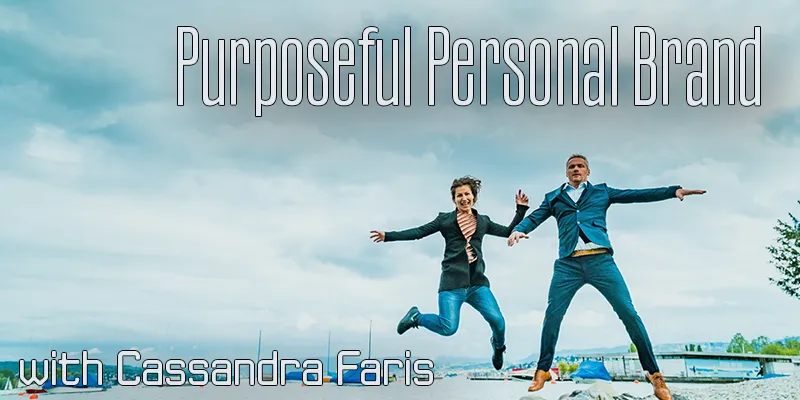
Cassandra: [00:06:51] That’s something that I, I discovered the importance of kind of controlling or influencing what people say about you kind of on accident. So when I speak about this, I talk about having a purposeful personal brand. And for me, my brand wasn’t always purposeful. It was kind of accidental. At the time I was a tech recruiter and I started posting like job search tips and stuff like that on Twitter, or just was posting about, you know, skills and things that people should learn. And over time, more and more people started approaching me to talk about the things I was posting on Twitter, on panels, at talks. People approached me to help organize conferences, all of these things. And I eventually realized that if I was deliberate or purposeful about what I was posting on my social media platforms, I could actually use that to my benefit. The whole long story is that when I first got started in tech, I was told, don’t be the dumb recruiter who doesn’t know Java and JavaScript are different things. I took that to mean I better understand the technologies I’m recruiting for. And at the time, Agile and cloud were the new hotness. So, I started going to those meetups and user groups, just kind of to understand some of the technologies. And then I had followed several software developers on Twitter, Mostly at the time, just friends and stuff. But I saw one day a bunch of people tweeting with the hashtag #CodeMash. And for those who don’t know, CodeMash is a big conference here in Ohio. It’s at an indoor water park in the winter. It is kind of college meets summer camp. There’s learning, there’s a lot of fun. It’s honestly my favorite week of work ever. But that day, I saw— I hadn’t been to CodeMash yet, but I saw these people tweeting about it. And I knew it was a thing. And so, I literally just followed every single person who was using the #CodeMash hashtag. I just followed them all on Twitter, and I still follow a bunch of them. And at first, I just sat back and kind of listened to what the conversation was, what people were saying, what their concerns were. And then, as I thought I could contribute, or weigh in, or give advice, or whatever, that’s when I started participating. And I got nervous at first. It’s like, these developers, all the imposter syndrome, right? Like, I’m thinking, oh, these developers, these technologists, they’re never gonna accept me as a recruiter. And what I found was that as long as I was authentic, as long as I was not having some ulterior motive or agenda, but I was just genuinely trying to be a helpful person, people were actually excited to have me in the community, even as a non-traditional— I have a degree in philosophy, so I’m very non-traditional when it comes into tech. And so, it was really cool to find out that I would still be accepted as long as I was me.
Matty: [00:09:28] I think that speaks to something about the agency that we have about how we want to be perceived. I, I think for myself as well, you know, my background is in, in operations. I, you know, and my short way that I’ve explained to people outside of the industry when they ask what I do as a developer advocate, I say, you know, I spent 2 decades working in TechOps, now they pay me to talk about it. But there’s, there’s more nuance to that because if you think about people who’ve known me either parasocially or just generally and say, okay, what is Matty known for? There have been different eras of that for me, right? Sometimes with intentionality and sometimes by accident. But for example, when I worked at Chef where, you know, infrastructure as code, config management, you know, I was doing a lot there. And then I got a job as an advocate at PagerDuty and PagerDuty’s focus is different. And it was an area that I had experience and expertise in because I’d done incident response as a job for forever, but nobody knew me as the incident response guy. Nobody knew me as the learning from incidents or any of that stuff. But in order to be able to do my job, I had to work on that reputation. And it’s not— this is the thing where I think people listening to this might switch their brain off or switch off from listening and say, oh, so this is about how you invented yourself. And it wasn’t about that. It was about being able to have intentionality about what I wanted to be known for. And I said, okay, so for a year, I said, if you give me any stage, I will get up there and I will talk about incident response. I will talk about blameless postmortems, incident reviews, learning from incidents with authenticity. But it was a focus in what I was focusing on. I can’t— but then on the contrary of that was a point where at one point my boss said, okay, well, we need to be better known in the ITIL part of the world into the IT service management. And he’s like, so Matt, I want you to go out there and get that same reputation there. And I said, you can’t just decide to have authenticity. This is a challenge that people who work in marketing or developer advocacy or any of these external-facing roles where you will get this direction that says, Cassandra, why can’t you just go out and become a super expert on this and everybody know you’re an expert on that? And you’re like, because that takes time in order to be authentic. It’s not just going and posting on Stack Overflow all over the place and trying to build Reddit karma or whatever Reddit’s thing is called. It takes time and some of it you can’t just decide to do. I think that the nuance of this is saying, this is what I want to be known for. But the reason you want to be known for something is because it’s something you’re actually really good at. But it’s just that nobody heard. You’re the best kept secret. I think you can do the opposite, or the other part. I think you can do the, I really want to get involved in AI and I don’t know anything about it, and I would like to build a reputation there. But you have to be able to back this up at some point in some way. And I guess this is all we’ve been talking— I’ve been giving the examples that are very external-facing, but I think it’s still true internally as well. Like, what matters in your organization? The reason you want to build your brand is so that you get the work that you want, right? You know, if you’re known for doing the thing you love to do, then maybe more people ask you to do that than the thing you hate to do.
Cassandra: [00:12:42] That’s actually where my life is right now. Well, first of all, when I transitioned from recruiting to community management, I was actually at a conference, KCDC, talking to one of my friends, PJ, and I was lamenting that I couldn’t find developer advocate roles because I can write about this much JavaScript. I just am not a hands-on programmer. And PJ turns to me and he goes, have you considered community management? And I go, that’s a job? Like, that can be my actual job? But it’s interesting because every single role, that’s exactly it. So, I had to get myself from being perceived as a recruiter to, I moved into community, be able to tell that story, why I moved from recruiting to community. And then I’ve managed a community of open-source contributors for SaltStack. I’ve managed community around a financial project. Currently, I’m managing a community around people that are learning Kubernetes. And the interesting thing about it is that this role is, I’m more hands-on the technology than I ever have been before. And I’m personally dogfooding, basically, the Q Campus product, and going through the labs and learning the product myself. And so, right now, I obviously cannot pitch myself as a Kubernetes expert, but what I am teaching, what I— one of the ways that I’m talking about myself, one of the things I’m working on is just being somebody who is learning Kubernetes, you know, so come along for this learning journey with me. And again, that’s transparency. But yeah, every time I switch to anything, you have to not even necessarily rebrand, just kind of update, you know, update what you’re doing. The cool thing is that the skills required Like, the human skills are the same, regardless of whether you’re managing open-source contributors or Microsoft influencers, because I managed both. I did, you know, I managed MVPs as well. So, the skills remain the same. So, it’s more learning kind of the language, the who are your key leaders in a given community, building relationships with them, rather than, you know, trying to be everything, trying to be an expert all at once. But it’s— you are continually evolving. And I— right now it’s also interesting because with Twitter usage on the decline, myself and a lot of people are trying to figure out where do we go next, because all the content right now is going to short-form videos. It’s to the point where Google has admitted that in some search categories, Instagram and TikTok are actually beating Google in search. So that’s something that The brand can remain the same, but the tools might change. And that’s where we are right now, is figuring out, is it Bluesky? Is it TikTok? Is it some other platform we don’t know about? That’s always a challenge. It’s also why it’s good to have a presence on multiple platforms. I’m starting to see actually Instagram used a lot more professionally. I’ll be at events and it’s very generational. Anybody Gen Z and some of the younger millennials want to connect with me via Instagram. Anybody else wants to do LinkedIn. And it used to be Twitter or LinkedIn. So, it’s been interesting to see that. And it was usually the younger people that wanted Twitter. So, it’s been interesting to see that demographic change even within my own circles and then learning how to talk to those audiences.
Matty: [00:15:56] I want to come back to kind of this external brand place because I think it’s far less common in any kind of role to sit there and say, hey, I’m going to sit here and I’m going to work at JPMorgan Chase for the next 20 years. That would be great. That’s even, even in kind of the normal enterprise, I think we’re moving more so our brand matters externally, even if our role is not external, because like, like you said earlier, that helps shortcut the resume process. And I think it’s, it’s interesting because especially in software engineering, it’s sort of, it’s all about your GitHub contribution graph. And we’re like, that’s, that’s an easy way to talk about it, but it might not be the best way for you. So I want to think about that in a second, but first maybe think about your internal brand. Like within an organization, especially people who are not working in a 20-person startup, but they are working at Target or JPMorgan Chase or Visa or, you know, UnitedHealth Group. And you’re saying, okay, you’re in this large organization, which itself is a community, which itself is a technical community. How do we have intentionality about what brand we want to have? And how do we do that inside of those walls, right? How do we work on our internal brand? Maybe?
Cassandra: [00:17:06] And is it all that different? So for me, it almost goes in a different way. So I tend to choose opportunities, whether they’re jobs or speaking or conference or something else in life that match with who I am as a person. Like, my brand doesn’t— it evolves. But at the end of the day, I’m fairly consistent. Like, you know what you’re gonna get with me, you know what you’re gonna talk about. And so when I’m interviewing for jobs, or looking at new opportunities, I make sure that they’re going to align with who I am as a person. So for instance, I’m not a super competitive person. I did sales for a while and just was not driven by it. So I might not necessarily go in for an opportunity that’s a very competitive kind of cutthroat culture. I also like to have a lot of creative freedom and a lot of room to experiment and try new things. So that’s something that I’m going to look for in a in our— in an opportunity and put it out there from the beginning. And I think that’s a better approach than trying to pretend that you’re somebody you’re not, because then you get into the job and you’re miserable, or you found out that you don’t know what you’re doing. I think it’s better to try to make the opportunities fit your brand, and then it’s just a matter of being consistent. I— when I do go into a new community, regardless of online or in person, I spend a lot of time too just sitting back and listening and deciding what people want to talk about. And then those are the things that I might highlight, you know, in my content or in the things that I’m sharing.
Matty: [00:18:32] I think that genuineness is very key. And I think that’s the nuance that is what we’re talking about here is how do you take something you already are and tell more people about it? Things get really weird when we think about inside of an organization, what we’re trying to build inside of there, because some things are inherently contradictory. And I saw Emily Freeman had a tweet the other day about when she’s interviewing someone, something to the effect of, you know, that you’re not talking about what you did but what your team did, right? But what you did with someone, how you enabled that. And it’s, it’s always, it’s a really fine line because we feel like when we’re talking, we don’t want to take credit for someone else’s work, you know. But also, if it’s always I, I, I, that doesn’t show someone as a team member. So when I bring that up is that’s the the tension that we have when we’re talking about quote unquote advertising ourself, you know, and then especially in certain roles in tech, they’re very unsung as well. You know, operational roles, always like to say they’re like being a corporate lawyer. Nobody knows what you do until you don’t do it, right? Nobody knows all the times that your corporate lawyer saved you from being sued. You only know when they messed up. And you got in trouble. And so we— and people, I think a lot of people are not comfortable with talking about themselves or their accomplishments. And but if you don’t, who’s going to do it for you is sort of the thing. And this is about taking that responsibility to think of ways within your organization to not sit there and be bragging or feel like you’re bragging. Number one, 9 times out of 10, you think you’re bragging, you really aren’t. But telling a story in a way that brings your team up as well and thinking about different opportunities within organizations. Like, because you’re not going to tweet about this internal project you did and your audience for that is even not your LinkedIn followers anyway. It’s your colleagues, right? The other teams and departments to know what you did. And I think That would be kind of the thing I’d be interested to explore is how do we take— and this is why I want to take the step back and let’s go back to saying, how do you do this externally, you know, and say like, okay, how do we leverage tools like Instagram or different socials or LinkedIn or building these things? And then say, I think a lot of that is transferable to an inside story too. It just might not be on that platform. So for listeners, I’m saying now we’re going to pivot and talk a little bit about how we can leverage those things But even if you’re like, I’m never going to talk on Instagram about this new billing system that we built, but the skill, the human skill of knowing how to tell a story that we learned from that might be applicable on the inside too. So, how do we learn how to do this, right? Like, if we’re like, again, saying, hey, I’m not a marketer. I don’t like talking about myself. I don’t know how to, you know, I sit there and I’m like, I don’t know how to use the editing tools to make a cool TikTok and I have to have my 11-year-old show me how to do it. So how important is it to be like real slick and good at this versus just telling a story?
Cassandra: [00:21:44] I think it’s more important to just be able to tell the story, but you need to sit back and do that. So when I’m sitting down with somebody to help them figure out their brand or when I’m giving my talks on this, there’s actually kind of 3 different questions you can consider. And once you’ve considered and answered those questions, it makes it easier to talk about your accomplishments. I can go on and on about the importance of talking about accomplishments, but basically, and I suggest that people sit down and write this down, but, and I’ll send you a link to the slides that have these 3 questions, but it’s basically, who are you professionally? And I tell people, you know, write down your top 3 technical specialties, top 3 professional specialties, and top 3 contributions to the team and the profession. But since it’s a personal brand, We do that as well. Who are you personally? And again, you write down 3 interests and hobbies, 3 of your most important beliefs and values, and then 3 aspects of your social, family, or community life that you want to connect with people over. And then how do you connect with people? And by that, you identify what are your shared interests, what sort of advice, opinions, information are you looking for, and what do you want to know about other people? And once you’ve answered all of those questions, then you have a bank of material to pull off of. And it helps you at least see in, in literal writing what you’re good at. And that’s a part of learning how to talk about your accomplishments. It is something that I am extremely passionate about. I’m fond of saying that modesty isn’t a career-enhancing trait, but that doesn’t mean be an asshole. It is very easy to talk about the things that you’ve— well, once you practice anyway, it becomes really easy to talk about the things you did, the things that you accomplished, things that you achieved once you just get used to it, once you’ve written it down, once you’ve recorded it or logged it somewhere. And then when you talk about that stuff, you talk about it a lot of times in the framework of how it helped. Did it help your company? Did it help another person? So, for instance, I’m working on a new marketing campaign right now. I just ran an event that was really successful. And, you know, so it was a Kubernetes Learning Day by KubeCampus. The event sold out. It was great. And so, when I reported back on it, I got to say, yeah, our event sold out. It was awesome. We had all of these people who got, you know, the learning day that I put together allowed 200 people to get an introduction to learning Kubernetes. And so that’s how you frame it. So you’re like, yeah, I did this thing and it was really cool, but it helped all of these people rather than pretending that, you know, you’re God’s gift to the DevOps world or something like that. So it’s just talking in specifics, knowing what you’re good at, knowing what you’re confident talking about, and then just practicing. And you can practice. I don’t care if you stand in front of a mirror and practice talking up your accomplishments, but people get too modest. And if you don’t, your manager, your peers, your community doesn’t know what you’re doing if you don’t share that. So you need to share it out and not be completely keeping all that information inside of you.
Matty: [00:24:53] There are a couple things that jumped out from what you were just talking about. I was thinking about, and they’re relevant to their— they’re happening within some conversations I’m having professionally right now within my organization. And one that jumped out at me when you’re thinking about how you talk about your accomplishments, was show, don’t tell. And I’ll bring that up in 2 ways. So we all liked on social media, whatever platform we’re snarking at each other on lately, the word thought leader, right? The quickest way to get mocked on tech Twitter is to put thought leader in your bio, right? And there’s a reason for that. And it’s interesting because I remember how I learned that the hard way, not the hard way, but on accident was many years, 10 years ago, I was going to put a webpage up because I was thinking about all the people I had learned from and I was going to make my list of DevOps thought leaders. And I remember J. Paul Reed, I think I put it up for a minute and J. Paul Reed reached out to me and said, please take me off this right now. I do not want, because there’s a connotation. So, it’s sort of like someone who’s a badass doesn’t have to tell everybody that they’re a badass, right? If you’re a thought leader, you don’t tell everybody you’re a thought leader. It’s shown. So, that’s the really broad way of saying it. But if you’re thinking and saying, okay, I want to show my industry authority, you’re not gonna write a blog post about what you did and it’s not gonna be the story of how Cassandra fixed this problem. The story is about the interesting way that this problem got solved, but you’re the one solving it and that all comes through, right? People pick that up. So, but if you make the story about you, then it starts to set off the radars of, wait a minute, okay, this is about this, this is not what’s interesting. So it’s show, don’t tell is, is the, the first thing when I, when I think about that. But the other thing is, this is now getting into some practical things that, that I think about, about being able to tell these stories, right? So one is I, I have a blog post, it’s very short, but it’s— I’ll put a link to it. It’s called Keep a Brag Book. And people do this in lots of different ways. And there’s a couple reasons when I think about it. The reason that I started doing it was to help myself with my imposter syndrome. So, when I first started working at Chef, I came from the Chef community and I was like, I came into the mothership of all the experts. And I was like, I can’t believe I’m working here with all these people that I’ve been learning from for however long. They’re my colleagues. And that anytime one of them, I would get a message like in a HipChat DM or something, that was, was recognizing something I did, I would keep it in an Evernote notebook because— and then when I was like bummed, I would go back and look at it. So, but what is also— it turns out these are great for— they’re very good for performance review time, but they’re also good for you to sit back and be able to step back and say, what have I done that I should talk about? Because when you’re in the middle of it, nothing that we do seems extraordinary or remarkable because it’s just what we do. Right? So, but then if I sit back and look at it and say, oh, that was an interesting story. And what’s kind of fun is think about how you can do that for your team, because if you’re doing it with your team, it’s not about— this is, you know, so we, we do things within my team where we do a monthly wrap-up of DevRel’s activities within our company, and then we write that up as a post and it gets shared internally. But we don’t do it in the context of Hey, let’s brag about all the cool stuff DevRel did. We position it as useful for the rest of the organization because that way the sales folks can see, oh, these were— this is interesting content my customers might want. We’re really sharing what we did, but not in the context of patting ourselves on the back for our accomplishments. It’s because people don’t know about the things that you do and they generally find it interesting, but you have to put it in the context of why it’s interesting to them. And why it’s useful to them. That’s how you get people to read. Because how many times you get the emails, it’s like, what’s new at Big Corp and whatever, and there’s all this stuff, and we don’t read any of them. But we read them if there’s something in it for us. And I think maybe that’s the trick, right? Is like, how do you brag by giving someone something useful? I mean, I try to always, I guess, be useful in my interactions.
Cassandra: [00:29:08] If somebody else is involved. So like, I wasn’t the only person that put together the learning day. I had a whole team helping me with it, and I can herd the cats basically. But giving other people credit as well, I think, is part of how you accomplish that, is just talking about what you did and talking about what other people did. Or like you said, how it benefits people as well. That’s another thing. So how does it benefit Caston that I gave a talk at, you know, KCDC on personal branding and talking about why that mattered and why that was important to, you know, my manager at Kasten so that I can keep doing the activities I’d like to do. But you do have to, yeah, just have to think about how it helps other people, like you said. And also if somebody else is involved, be sure that they’re getting the credit and the acknowledgement that they deserve as well. And I’m real quick, that’s the other thing I’m really, really, and constantly propping up my friends for their accomplishments, propping up my friends for their achievements. You know, I’ll see when Microsoft MVP awards are, you know, out. I’m not an MVP, but I used to work for the program. Several of the people are my friends. And so I just put out like a congratulatory tweet to everybody with the MVP hashtag, you know, just, hey, check out my friend.
Matty: [00:30:24] They’re doing this cool thing. Let’s just think about now from this external perspective, like you said, you went through those questions about like what we want that to be. But what are, what are some of the things especially there’s So much to take on. And this is why, I mean, it is a full-time job to manage this for a company. It’s a team’s job. It’s why we’ve said, like, tired of hearing this, like, oh, the intern’s running the Twitter account. It absolutely is not. It is a professional hardcore team that does that stuff, although whatever it is now. So now we’re saying we’re going to bring that onto ourselves. So are there any tips or approaches? Like, we kind of started, you said these are the questions to ask. But what are some of the things you would think about to be able to leverage these platforms for someone that this is not their main job and they want to be able to do it in a way that’s not going to create it as a whole other job, but be able to be useful? I’m listening very carefully right now.
Cassandra: I mean, it wasn’t my main— it’s still not my main job. Social media is a piece of it, but I think the hardest thing is actually just finding the time for it. And the only way it’s going to happen is if you make the time for it. So I, I usually do it first thing in the morning, but I have an hour blocked off on my calendar first thing every morning to just do social media, check in, see what people are saying, see what the conversation is, all that stuff. Anything that I might post or schedule to post would also get done during that time. But it’s hard because social media is our job and it never stops. So it can be really hard to unplug. It can be really hard to I had to do a lot of work to get over the FOMO if I, you know, didn’t necessarily read every single post that came through my feeds. Or I quickly learned that after a conference or an event where I’m on social media a ton, I take a break for a day or two after a conference. I’m just gone from the internet because I’m just— I don’t want to get burnt out. I’ve gotten burnt out before on social media and Social media can be a challenging place mentally as well. And so being aware of how social media impacts me, being aware of who I follow, how do the people or things that I follow, how do the things I talk about make me feel? Because if any of those things are harmful to me, it’s— aside from it being unpleasant, it actually is a detriment. Because if I’m coming from a place of unpleasantness, I’m coming from a place where I don’t feel psychologically safe, I’m not able to create content. I’m not able to put anything out there, put my thoughts together in the way that they need to be shared.
Matty: [00:32:55] I think about it as a tip and maybe blogging will have a renaissance now that we’re more scattered and it’s like, bring back Google Reader. But I found one of the most effective uses when I look at people who leverage blogs, a lot of it is either a combination of documenting something you’re doing or learning in the open. And learning in the open is very risky. Like, there’s a lot of vulnerability about that, and we’ll come back to that. But it’s funny, there is this blog post I wrote so many years ago, and I laugh at like how much I continually get traffic to it. And it’s, it’s about configuring SharePoint in a one-way trust domain situation or something like that. It was this weird problem I had And I figured out the solution. And the main reason I wrote the blog post was to share it with my team. It was just, I sat there and I was kind of like, all right, I kind of need to write this somewhere. And we didn’t have any type of internal good way to deal with this. And I was like, I just need to explain to my sysadmin team like how I fixed this. So I said, I’m gonna write a blog post on my personal blog. And it was just there. And then interestingly, it got picked up as like an answer on an MSDN forum. Like, so it was getting tons of traffic ’cause people had this one problem. This was the one place on the internet you could go to find the answer. And I still get— it’s funny, I’m like, who’s still having this problem? I actually feel bad for you if you need to go to my, my blog post because it was a, it was a problem. So one of the things is just sometimes when you’re sitting there and you’re like, I, I had this problem, I fixed it, I’m just gonna write this here. And, and never with the intent of because it’s gonna get great SEO juice and I’m gonna convert and get all these users, but just literally I’m just gonna write it down. And you do that And you know what? Maybe someone reads it, maybe nobody reads it. But first of all, you got it out of you. Like, it has a direct function for you, which is you wrote it down and now you have it somewhere. And maybe it’ll help somebody else. And maybe one day you’ll have the fun experience of having that problem and searching for it and finding your own damn blog post about it and going, oh yeah, I already fixed this 8 years ago or something. But we’ve— so many of us have been there before. But even learning in the open, and there’s a story I really love. So Annie Hedgepeth, who was a non-traditional entering tech story. And she’s been on our show before, but many years ago she decided she wanted to, you know, get involved in tech. And she took on a technology that was very nascent at the time. It was this infrastructure security testing tool called Inspect. And as she was learning it, she was writing on her blog about, okay, today this is what I learned and blah, blah, blah. And an interesting fun thing that happened is this was a poorly documented, there was no real good documentation on this tool. And the product team said, you know what? Annie’s blog is our documentation now. And so, you would go to the Inspect project page and it would be like, you want to learn how to do this? Go to Annie’s blog. And that became an area that she became an expert in. And because it doesn’t mean that just because you document your journey that it will become authoritative in the industry, but it can. And going all the way back to what Cassandra talked about at the beginning about saying, hey, when I’m learning a thing, if you’re transparent about it, You’re still gonna— there’s, there’s, there’s jerks on the internet if you haven’t noticed. There’s nothing we can do about that. But the majority of people, if you’re, if you’re genuine and open about it, will be excited about that. And also, there’s way more people out on the internet that are in the same shoes as you that are saying, I absolutely need this. And this is the hard thing. And Kat Cosgrove, who’s at Dell now, she’s given talks and written about this, about beginner content is some of the hardest content to create. And nobody wants to do it because we all want to create the tutorial that’s like expert mode stuff. And you know how many people need expert mode stuff? Like a handful. You know how many people need, I don’t even know how to get Kubernetes installed? Hundreds of thousands, right? Like, I— okay, how do I write a join? Like, I want to just learn basic SQL. So many people need that. How many people need to know how to best optimize sharding across multiple geographic nodes at the scale of a million users per second, like 12, right? So first of all, much smaller audience you have there, a much, and let’s be honest, a much more, not particular, but, you know, if I’m creating beginner content as I’m learning it, the bar is lower as well. But if I’m gonna go out there and I’m gonna say, okay, I’m gonna write this super expert stuff, it’s gonna get scrutinized so much more as well. And there’s— but it’s hard. It’s a vulnerability thing. It really is. But you also learn things in a different way when you teach them. So, when we’re learning something and then when we have to explain it, it fires— it uses different neural pathways in our brain and we learn things by teaching them. So, there’s also, in addition to creating this and helping people, you’re going to learn it better yourself and you’re gonna get better at it. But again, the reality is, I mean, I think about this when I was at Pulumi and, you know, Kat and Laura and I, we would do workshops and we would have like InfraCode 101 and we would get hundreds of people. And then we’d have this workshop that was like deep dive stuff that was really fun to do. And like 2 people would show up to it and they really, those 2 people got a lot out of it, but the number, that funnel, you know, so you’re, if you wanna be very proactive about it, your audience and the demand is so much greater for the stuff that you’re learning as you go, right?
Cassandra: [00:38:30] That’s exactly it. And that’s— that was actually part of the appeal of joining Kasten and KubeCampus is— so the product was created because CNCF did a survey and one of the biggest barriers to using Kubernetes is people who don’t have training. So created a training tool and it starts with the first lab is networking fundamentals and it’s What’s a cluster? What’s a pod? And that one I actually teach now. And every time I teach it, I understand the concepts more. It’s challenging when I’m not a hands-on daily practitioner, but the more I teach it and the more I look at the material, the more I understand it. And it is, it’s a learning journey. One of my goals that I’d like to do is create a blog series about my Kubernetes learning journey. And it will, of course, talk about KubeCampus, but also some other resources. That I’m using as I learn how to use this tool. And it is— it’s vulnerable and it’s scary to put yourself out there and say, I don’t know. But in general, I’m finding that the more I allow myself to be vulnerable, the more open I am, and the more I purposely put myself in vulnerable situations, the more success and support I have. Like, nobody’s ever said to me, oh, I don’t believe you know what— you don’t know what a cluster is. You know, like, nobody’s ever said that. They’ve said, oh, let me help you understand this concept. And it’s the same thing I mean, my job is, you know, relatively new. I’ve been there 7 months and there’s a lot of projects and stuff. I’m still very much learning the ropes. But the great thing is that I’m learning as I go. I’m being transparent about what I don’t know. And by doing that, then somebody else can help me so that, you know, the first couple of a certain type of event or project or whatever we do, I might have somebody working with me, but then I can run with it on my own. But it starts with— yeah, it starts with admitting you don’t know. And we do. I think in tech, sometimes people have a very hard time admitting that they don’t know things because technologists, developers, and others are perceived as these kind of geniuses. And there is a little bit of a— there are pockets of the community that have this culture of, like, you have to be the expert on everything, you’re going to be looked down upon. And so, I know it can be hard for people to admit they don’t know things, but it’s one of those things that I try to encourage people to do. It’s also funny enough, to get back on topic, one of my tips that I tell people to do when they’re first setting out to create their brand and they’re first creating their first content and posts is think about something you want to learn and ask for resources, ask for help, ask a question about it because developers love to share their information too. They love to share their knowledge, they love to teach. And so if you just put the question out there, somebody’s going to send you Oh, check out this blog post, check out this talk on that, or just straight out answer the question. So you just, you have to put yourself out there.
Matty: [00:41:19] And I think you need to put yourself out there in the way— I’m using this word carefully when I’m gonna say being appreciative. And it doesn’t mean you need to bend over backwards, be like, oh my God, thank you so much, you’re so amazing, whatever. But acknowledging that there was effort in doing that and also taking your own agency in your learning. Inside of organizations, we talk about a support vampire, right? This person who’s in your support channels and is asking for every step of the way, right? And so, part of this is learning is a partnership, right? So, if someone’s like, hey, I want to learn about this thing, Matty, can you help me with it? I’m going to help you with it, but I’m also going to expect you to do some work on your own, so to speak, or I’m going to help you go to that. I’m not going to give you all the answers. Because that’s a lot of work, right? And also, it doesn’t— frankly, it doesn’t help, you know, if you start saying— but there are other times too, and depending on your relationship, where you might say, this is— that’s— and I guess that’s the one to look at as well when you’re looking, am I looking to learn this, or am I looking to accomplish a task? You know, because every now and again, there are the things that for me, I’ll sit there and I’ll say, I need to do this one thing, I will probably never have to do it again. I don’t actually care to learn how to do it. But I know my friend Cassandra knows how to do this. And I can ask her a favor. And say, can you just, can you just do this for me? And again, knowing what I’m asking, number one, and the person could say no. But if you’re asking for help to learn, that’s not asking someone to tell you how to do something. That’s, you know, and that means maybe I’m going to do a little research on my own as well. You’re gonna, you’re gonna help guide me because also, if I’m helping teach someone, I don’t want to give them the answer necessarily. I want you to get there as well. I want to guide you and give you a map. That helps you, but you’re going to choose exactly how you go there. Or you’re going to look at my map, but you’re going to pick up the bucket and carry the bucket. I’m not going to carry the bucket for you because that just— that doesn’t— that’s not learning. And again, sometimes you don’t need to learn. Sometimes you just need to say, I need this bucket of water carried from point A to point B, and you can carry it faster for me, and I will ask you to do me that favor to do that. But I think that’s where you find that people everything that— because I’m talking about people being appreciative and wanting to like help you is, again, it’s not— we don’t want to— people who want to help do not want to feel like you’re genuflecting and being like, oh my God, thank you, you’re so amazing. But where that comes through is more in just that trade-off of cool, and now I’m gonna, you know, I’m gonna carry my part of this as well. Because honestly, that helps us as the person that’s teaching too, because then we see Hey, if I gave you some direction and you don’t get there, but you tried, maybe my direction is not great. Maybe I need to say, oh, I made assumptions. And they’re not accurate. And I need to adjust to that. And that’s how we all get better at that too.
Cassandra: [00:44:10] To add on to that. So when I talk about helping people, I think I used to think about it a lot more as like, I help you, you help me. But that’s not often how it works. It’s more the— and the technology community is amazing for this. There’s tons of people who mentored me and taught me and got me to where I am. And why can’t maybe necessarily help them back? Like, one of my friends is looking for a director of DevRel role, and I used to work for him. He’s a mentor to me, and I don’t have a role to hire him for, but he’s helped me a lot. So, I try to do instead is like pay it forward, basically. So he’s helped me, he’s mentored me, and now I have a couple other people who are asking me similar questions and wanting to learn things I needed to learn a few years ago. And so I pass that knowledge on, you know, pass that knowledge on to somebody else, basically. And it’s, it’s, it’s very pay it forward, and you see it all the time, especially when people are laid off and looking for jobs. You see it constantly that I might not be able to hire you, but I’m going to share, you know, that you’re looking for work right now or something like that. And I call it karma, call it what you will, but I feel like the more you do that and the more you reach out and help other people as well, the stronger your brand is, the stronger your reputation is, the more success you have. And I think it makes you a better human being and a kinder human being as well, along with that.
Matty: [00:45:36] Well, and that’s part of your brand then, is that you’re someone who is proactively helping. And I’ve thought about this too, where in places I’ve been in, people will, hey, Maddie, can you get this favor done? Can you ask so-and-so to do this or that or the other? And I said, part of the reason that most of the time when I ask someone for a favor, they say yes is number one, because I don’t ask a lot and I always take no. So, I may reach out to you and say, hey, Cassandra, can you be on my podcast? Can you do this thing? I’m doing this thing. And I will say, say no. Feel no obligation. And if you say no, I say, cool. But you know, I shouldn’t put words, maybe I assume you know. I assume that you know that I’m not asking you once a month to say, oh, can you retweet this for me? Can I quote you in this blog? Can I do that? I consider that I have a minimal number of favors to ask of people and I want to use them in the best way. And I remember this has come up in previous jobs where Again, as you become some— if you’re someone who has a powerful network, and that’s not everybody, and it’s not even something everybody needs to aspire to, but using this as the example, people say, okay, I start working somewhere and said, Matty, cool, you know all these people. We’re doing a new launch of our product. Like, can you reach out to all your influencer friends and ask them to tweet about it? And I say, I’m going to ask one favor. Is this the favor you want me to ask of this person, or do we want to save it for something else. And that where that goes into connects to something else. I had this sort of— I was thinking it’s kind of a half-baked idea. We’ll see where this goes. But when you’re looking for help, you don’t have to go to Kelsey Hightower all the time, right? And Kelsey is amazing and brilliant and incredibly helpful. But there are— there’s only one Kelsey. There’s thousands of people who know Kubernetes that have the ability to help you and maybe have more resource to be able to do that because they don’t have half of Twitter asking them for stuff all the time and also have a different viewpoint. So we definitely know the people in the space in all sorts of areas that we’re like, that’s where we’re gravitating to when we say, okay, cool, I have a question about blameless postmortems. I’m going to reach out to John Allspot. Well, you know what? There’s like tons of people that you could ask about. And so I think there’s a tendency to gravitate towards those places. But because those people have that gravity, it actually makes it harder to get help from them necessarily. And it also, as someone who like, we don’t, even if you’re well, even if you’re the best-known person in this particular space, you don’t know everything and you never will. And those people will all be the first one to tell you that There are people that know more about Kubernetes, certain areas, than Kelsey. Kelsey will tell you that, right? There are people that, you know, and give it a try, you know.
Cassandra: [00:48:28] So, this is why I’m such a big, big, big fan of meetups and conferences. I would be at a conference every day if I could. And it’s because there’s that hallway track. There’s sitting over a meal or a happy hour or whatever it is. And you learn so much from other people. And it might not be Kelsey Hightower, but it could be— I literally met a woman at KubeHuddle who wrote a book on Kubernetes that now I’m understanding Kubernetes in a visual way, and I’m looking through it. And so you have access to those resources at events and learning from other people. Meetups are great for that because you have somebody at the front of the room who maybe an expert, or they may be newer about what they’re learning about, but you’re also with other practitioners who are also either there to learn, they’re at different areas in their Kubernetes learning journey. And so sitting around at a meetup or a lunch table or a conference hallway after a Kubernetes session, you all share your knowledge and it does that. It brings in different perspectives. It brings in different points of view. It, you know, there can be somebody who’s brand new, just learning, and somebody else who’s taught it in the past and they can suggest resources and stuff. So yeah, you look around for that and that’s where That’s where I find the tech community so important. That’s where I think events are important and resources like there’s Slacks and Discords for everything as well. So yeah, those, KubeCampus, we have a whole KubeCampus Slack where people, when they’re stuck on something about learning Kubernetes, they can ask questions in there and get support. And yeah, it’s learning from others. And that’s, I don’t know of, I have a hard time thinking of any other industries that are like this. Where there’s so much just kind of free sharing of knowledge and expertise among one another.
Matty: [00:50:15] That is an awful lot to consider. This has been a pretty dense episode. I hope that folks have gotten some, some great suggestions. If you go to arresteddevops.com/purposeful-personal-brand, that will have this episode’s show notes. We will put links in there to Cassandra’s slides about those 3 questions. Maybe we’ll actually put the questions right in the show notes to make it easy for you, as well as any other resources we’ve talked about in this episode. If you go to arresteddevops.com/itunes, you can leave us a review in the iTunes Store. Maybe Apple trying to rebrand iTunes to something else is not working on me because I still call it iTunes even though that’s not its thing anymore. You can also find us on Spotify and iHeartRadio as well as Audible. So we’re all over the place, and we hope that you listen to more and more Arrested DevOps and keep learning. Cassandra, thank you so much for sharing your thoughts and insights and advice here with us. This is a deep topic and there’s definitely more to keep talking about. Where can people maybe have this conversation with you virtually?
Cassandra: [00:51:22] Twitter is still my favorite platform. I’m Cassandra Farris on Twitter, Instagram, Facebook, LinkedIn. All the things. And then I’m on Bluesky. I’m cassandra.bsky.social. I got just my first name on that one, which is fun, but that’s where to find me. Or, you know, reach out to me via KubeCampus website as well. There’s a place there where you can schedule meetings with me via Calendly and all that stuff.
Matty: Fabulous. And we’ll have a link to KubeCampus on the show notes at arresteddevops.com/purposeful-personal-brand. This has been Arrested DevOps, and remember, there’s always DevOps in the banana stand.