Trevor: [00:00:00] I’ve been hearing a lot of, well, what are we going to do for DevOps 2.0? And I’m like, dear God, don’t call it DevOps 2.0.
Matty: You just said DevOps 2.0.
Trevor: My hope is that by saying it on here and the ridicule it will receive, it will never see the light of day.
Matty: Welcome to Arrested DevOps. I’m your co-host, Matt, @mattsprattan on Twitter.
Trevor: I’m your co-host, Trevor, @trevorghess on Twitter.
Annie: So, we are here live.
Matty: Live recorded for you when you’re watching this or listening later at ChefCon 2016 in beautiful Austin, Texas. We’ve got an awesome panel of people here to talk about their impressions on day 1 of ChefCon, things that happened at the keynote, and cool new things that are going on in the chef world.
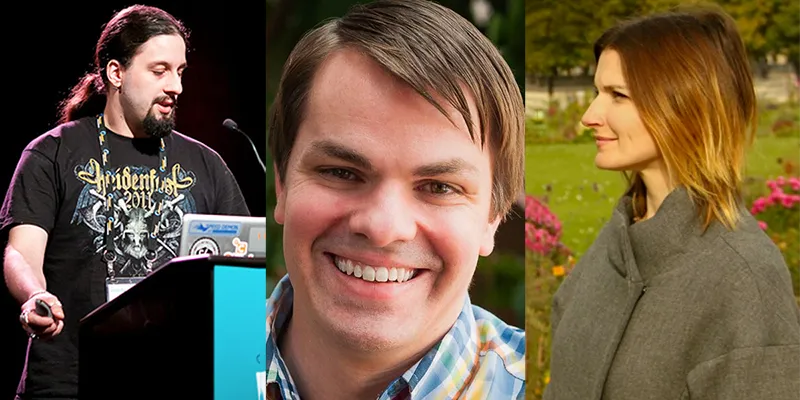
Trevor: So, so today on the panel we’ve got Jon Cowie, a veteran of Chef and a veteran of the podcast actually. John was on like episode 6, right?
Matty: Episode 11.
Trevor: Episode 11, you actually counted. So John, you want to introduce yourself again for those who may not know who you are?
Jon: [00:01:03] So I’m Jon Cowie. I’m a Staff Ops Engineer at Etsy, and this is my, I think, 3rd, 4th time at ChefConf, something like that.
Matty: Excellent. We also have first-time guest, and I can’t believe it either that he’s a first-time guest, Fletcher Nickel. So Fletcher, tell the people what they’ve won or who you are.
Fletcher: I’m Fletcher Nickel, longtime Chef user. I’ve been to every single ChefConference. How about that?
Matty: Wow.
Fletcher: So there you go.
Trevor: And finally, we’ve got Annie Hedgpeth on the show.
Annie: Yes, this is my very first, uh, Chef conference, my very first technical conference ever. And, um, I’ve only— I’ve literally been like in technology for about 3 months. So, well, I don’t know how I’m here, but I’m here.
Matty: We’re having a very differing— we’re like, we’ve got kind of the elder statesmen of the Chef community.
Trevor: Yeah, we’re organized. We’re organized not only by height for those watching on the video, but by, by, um, other measures as well.
Matty: [00:02:09] Yeah, I was gonna say Fletcher’s been to more ChefCons.
Jon: Yes.
Trevor: So, you know, so not by ChefCons.
Matty: So I didn’t realize— so this is the 5th ChefCon?
Fletcher: Yes, I think so.
Matty: So that means— and I was surprised when I realized this— that I’ve been to the majority of ChefCons because this is my 3rd. So my first ChefCon then, if you’re good at math, was 2 years ago in—
Trevor: so wait, we’ve got the full count in the panel then. So we’ve got, we’ve got 1, 2, 3, 4, and 5. Ta-da!
Jon: Show over.
Matty: I’m actually glad you listened. So yeah, and I just over the three years of the three different that I’ve been to, it’s just interesting and great to see just how the event grows. The huzzah and pizzazz that Chef brings to the event every year just continually escalates. The opening video was every year is a little bit more and more. So if you haven’t seen it yet, features Nathan Harvey hugging all the people.
Trevor: Literally everyone. Literally everyone. No hug unturned.
Matty: Now, and as our non-present co-host Bridget Kromhout likes to point out though, everyone should remember that HugOps is a TCP and not UDP-based protocol. So when you are going to implement HugOps, please make sure that your hugs act before you implement it. So one of the things I want to think— I want to kind of see what y’all think about is in the keynote this morning, Barry, Chris talked about the importance of how the measure, it’s about velocity, it’s about time. We talk about shipping delight. And one of the big key things, and there’s a Snapchat filter which I can’t get to work, but that says, I ship ideas. So that’s a core concept, I think, of this ChefConf. And I’d like to know, what do you think about how maybe things have changed either related to the years of Chef, also just within your experiences, that’s led us to this place today?
Jon: [00:03:59] I think one thing that’s been super interesting about the evolution of ChefConf has been, I mean, there have always been some companies that have espoused that kind of rapid agile delivery and continuous iteration and stuff. I think one thing that’s been super interesting is how that’s been incorporated in much, much bigger companies that traditionally didn’t do that. So, between, you know, ChefConf a few years ago and now, you have Like we had the National Football League talking today, we had GE talking today, like huge multinational, in some cases, companies talking about how they’re now responding and delivering more rapidly and, you know, agile and implementing features and thinking in more what you would call, I guess, like a software company mindset. GE were saying this morning they generate something like 40% of the world’s power and they’re coming around to this idea that they need to rapidly iterate on features. Like, It really kind of lends credibility to the things that, that, you know, people have been talking about for a long, long time when companies that size are realizing that this is, this is the way to move forward essentially.
Trevor: [00:05:00] And that they’re being successful with it. I think that’s where things are really impressive. You know, how many times have we all heard, we can’t do that, we’re a big company, we have to do things the old way and the slow way and we have to have process and all these. Well, no, you’ve got companies the size of GE Capital, you’ve got smaller companies like Alaska Airlines had a keynote this morning as well, all talking about how they’re using these tools, they’re using these practices to really, you know, ship ideas and ship them quickly.
Fletcher: Yeah. So on that, like, kind of what I think every year is there’s always, there’s always like an example that I kind of like bring with me forward that when I go and talk to other friends in other companies and they’re, you know, at various stages of like being able to move faster and have different scale, you know, amounts of velocity, adopting DevOps. But the ones that are still saying like, I can’t do this because, or we have to protect the such and such. And I, it’s hard sometimes to like, because what I want to do is say like, come on, like Standard Bank talk last year and they’re like, I can’t remember what they got their deployment down like from and to, but we’re talking like days or weeks. To like hours or minutes. Like Alaska Airlines, like, so places where like either you will go out of business, you know, legally, or just, you know, from losing credibility, or like people could die, right?
Trevor: [00:06:23] Like, right.
Fletcher: I hadn’t really thought to what extent GE is really responsible for keeping us all alive. The airlines I can understand, but like, so kind of for the The businesses that are in that mode of like, well, I can’t because, or like, we have to protect the users of the data, like, um, so that means like you can’t go fast and you don’t want to actually like be able to know what’s going on and have some, some actual compliance instead of the like theater of the auditors coming in every 3 years and that being the way you rationalize why you can’t do anything. Like, it, it just starts to like not ring Increasingly just does not ring true to me anymore. And it’s because like there’s companies you’ve heard of that are like doing this now. And yeah, you wouldn’t have thought like these, these big companies could like start to move like this. But then you see like over the years, some of these companies when they’re doing their updates, like they’re, they’re moving faster and like they’re actually starting to accelerate. And then you see the competitors in their space Either you start to fall behind or like they need to start moving too. But you’ve got companies like Disney, I think last year had said like, we’ve been at this for 5 years. So if your company is competing with Disney and you’re starting today, they have a 5-year start on you and they’re already moving faster than they were 2 years ago.
Jon: [00:07:44] So, can I add to that?
Annie: Also, I know somebody that spoke this morning that I’m rather close to. Works for a large corporation and for NCR. And he talked about how it’s not just, you know, automating all the things. It’s about the politics of it all. And it’s about getting everybody on board. And he just happened to find somebody in the Atlanta— he’s in Dallas. He found somebody in the Atlanta office, which that in and of itself is complicated, you know. So, he found somebody to be on his team or to rally with him for all of this crazy DevOps stuff. And so, he gave a speech on how, or both of them did actually, just on not only the complications of scaling to something so large, but just the politics of it all. That is a major part of it that people are gonna have to just suck it up and deal with, you know? You have to deal with like psychology and you have to deal with social issues and rankings and it’s just complicated and people need to really get on board with how to deal with that logistically.
Matty: [00:09:00] I talked to a customer today. I had a meeting with a customer and they were talking about challenges they have being very, very siloed still. But what was interesting is they said their implementation of Chef has inherently started to break down some silos for them because they’re like, hey, all of us in this room together, we’ve never worked together before until we started doing Chef. And it’s not anything magic about Chef, but they’re seeing this example and they’re like, okay, so this is doable. And I think that’s one of the things that the more we hear stories of success, because I’m a believer that when you know something’s possible, you’re more likely to try it, right? And so, a few years ago, if I was a large enterprise behind the firewall, I’m thinking, well, that’s fine. Again, just even 2 years ago, I would go see customers and they’d say, okay, you’re like the 5th person to come in today and tell me I should be like Facebook, or I should be like Netflix. And we still have the unicorns and horses conversation. And if you go back to arresteddevops.com/11, which was our Etsy episode, We said, you know, Etsy is not a unicorn, they’re a sparkly horse, as John said. And it’s true, we’re all doing regular work, but when we know it’s possible— and that was one of the things, I don’t remember the— I don’t know if Barry gave a metric around it, but how many large enterprises are using open source? And those of us that have been doing this for a long time, you know, I still think we live in a really weird new future of how things are happening. Was it 70% of the Fortune 500 are using Chef in a meaningful way. If 2 years ago when Jon Cowie and I met each other at a bar at ChefCon, even at that time we’d be like, would you really? They’re like, no, that’s cool. But just the amount of change that’s happening because it’s necessary, that’s the thing. It’s you have to adapt. Like, you know, you said with Disney, Disney’s got a 5-year head start on you.
Fletcher: [00:10:49] Scary.
Matty: You know, you have to be— and, and, uh, in the key you know, around Alaska, they said that’s sort of the thing. Alaska, you said, whether an 84-year-old, you know, multi-billion-dollar startup, you know, compared to their competitors, they say, hey, our competitors, they throw money at problems. Like, we don’t throw money at problems, so we have to do it in a smarter way. And they’re being scrappy and driving that innovation.
Jon: Yeah, I think Alaska was a— it’s a super interesting case study because the airline industry is one of those kind of it’s not something you particularly associate innovation with always. Like, everyone, as we all probably know, everyone generally has this perception that travel just sucks. You know, you have customs lines, you have baggage reclaim, you have check-in delays, all this stuff. And it’s cool to see a company taking— because, I mean, it’s easy to, it’s easy to, you know, call companies disruptive in the startup space where they’re kind of, as Fletcher was saying, the costs of being wrong are relatively relatively slight. When you’re dealing with airlines, when you’re having hundreds of people’s lives in your hand and you can cause nationwide delays if you get things wrong, it’s really cool to see companies working in that space start to take this disruptive approach and be like, well, we’re not going to accept this typical way of everybody thinking travel sucks. That’s just not good enough. We’re not going to stand for that. And it’s cool to see them bringing practices from this industry into, into that industry and delivering more rapidly and delivering these amazing new iterations. Like Alaska did— when the keynote video is up, I recommend everyone watches it. Alaska did a demo about how they’re doing e-ink baggage tags. So you can check in on your mobile app and the baggage tag on your suitcase updates magically. Like, that’s freaking amazing. And it’s really exciting. It’s exciting times.
Fletcher: [00:12:34] Yeah.
Matty: Anything, Trevor?
Trevor: I was going to say, so this, uh, to what you were saying, Matt, about, um, kind of having that use case now where people have done this before. I just was in Singapore, um, since last Saturday at a PowerShell meetup, and I did a Chef training. Um, and it was, it was a, it was an event that was overbooked. There was 20 people wound up showing up of the, of the 50 who had overbooked from the, uh, but what was really interesting is the type of people who were there. There were database administrators, there were people from banks, people from like machine automation industry, all of them here like with the kind of the same story of, you know, we’re hearing about these other companies going faster and moving faster and using these tools and, you know, yeah, we want to learn this.
Annie: That was kind of a— okay, so the people that you were training were probably already, uh, versed in technology and everything. But one of the cool things that I’ve been doing is that I want to show— because I’m new to technology entirely, 3 months in, I’m a baby— but I want to show people that Chef and what I’ve been focusing on specifically is Inspect. But like, it’s so like, uh, I don’t want to say easy, but to a lot of— to people that are more versed in technology. It’s easy. It is accessible. It’s so accessible to everyone. I mean, I really like— I’m 3 months in and I’m like teaching people how to use Inspect, you know? Like, it’s— there should be no fear. I want to take the fear out of, you know, in quotes, non-technical types doing things that— because really, the more people people that can be involved in it, the better, right? I mean, yeah.
Matty: [00:14:21] So anyway, and that’s a pretty ringing endorsement of what we’re trying to do with Inspect with Shop, which is to say— and I always like going back, I love reading, Annie, reading your posts, and I, I tend to learn stuff from them too because I’m like, I don’t pay as much attention to how to do stuff as I should. I’m a chief handwave engineer anyway. But, uh, one of the principles and ideas behind Chef Compliance and Inspect and all this was to say, okay, we want to communicate with code. And some of the challenges were saying, okay, you want to have your compliance folks, your audit folks, and all this, instead of being the way they communicate with you be a bunch of Excel sheets and PDFs and whatever, they’re going to give you compliant Inspect code. And I’ve had some, as I’ve talked to customers and prospects, And people are like, well, are you sure they want to do that? And that’s code and that’s hard. And I’ve always sort of naturally felt like it doesn’t seem that inaccessible. And I really like your point of saying it’s accessible. It’s not easy, you know, so let’s not diminish that. I mean, we’re all hard workers and we should pat ourselves on the back and, you know, everything, but it’s accessible. But it’s been— and it’s hard for me as someone who I’m like, well, I’ve written spec tests before and I think this way, so it seems super accessible. But if it’s new to me, I don’t know that. And that’s one of the things I really love about watching your journey. I’m like, this is true. It’s accessible from someone who’s coming to this and understands the ideas and says, I want to do this. And I haven’t written a spec test before. I haven’t written Ruby code before, but I can do this. It’s a ringing endorsement of that. It’s not just for your developers or your infra coders in your organization to leverage these, this, this tooling.
Annie: [00:16:04] Well, and even remediation through, uh, Test Kitchen. We were— we had a long conversation with Fletcher yesterday about Test Kitchen. I was like, thank you, seriously, because his, um, Test Kitchen, uh, was another thing that, uh, lessened the barrier to entry into technology for me because you could see everything happening like, like that, you know, in a snap. And, um, It was just so cool to— anyway, if you’ve, you know, y’all have all done test switching, you know, but I don’t have to explain it to you like I explained it on my blog. But anyway, I think because of open source and because of the heart of this community, that stuff is becoming more accessible to non-technical types, and it’s not dumbing it down. I don’t think it’s dumbing it down at all, which I know that I think that a lot of people fear, you know. I think that it’s just becoming more sophisticated, but in its, like, making it simple and sophisticated. I don’t know.
Matty: [00:17:07] It’s moving the value proposition to the content and the thing you’re trying to do and not being tied into esoteric arcane ways. And that’s hard. Those of us who’ve been doing this a long time, some of us have felt protectiveness and validation by, I know this stuff, and I’m the only one in the organization that’s super smart at this. And sometimes people look at that as job security, or even just for validation as a person, right? To say like, hey, this is how I feel really good, because I know this thing that nobody else does. And the reality is, the world’s moving, right? You know what I mean? Like, the shifts are happening, and we want to go with it. The thing is, it actually just lets you do way more interesting things. And that’s, you know, again, you let the robots do the boring stuff. And now I can, you know, I’ve talked before when I, you know, uh, I’m pretty sure you said this on episode 1, probably, uh, when people say, well, if I automate all this stuff, what am I gonna do? And I’m like, well, you’re gonna do the things that use your big brain to do that aren’t just typing commands over and over again. You’re, you’re gonna actually think can provide extra value. I’m interested to think about— so Annie, this is your first technical conference. I want to talk about the conference a little bit, and then I want to talk a lot, or at least a little, or somewhat, I want to talk about Chef Automate and some of the new product offerings we have. But let’s talk about the conference. So Annie, this is your first ChefConf. It’s your first technical conference. We’re here at day 1. I know you were here yesterday for the workshops. Our, uh, did you do a workshop or did you do the Community Summit yesterday?
Annie: [00:18:40] Community Summit.
Matty: Okay, so you’ve done a Community Summit before?
Annie: No, never.
Jon: No.
Matty: So first of all, what did you think of the Community Summit? What was that experience like for you?
Annie: It was really cool. I mean, it’s just, it’s like a hallway track times 5, you know? Like, it’s just really cool because you get so many different, uh, viewpoints, and it’s very valuable. I think I loved it. Um, I An interesting point that I noticed, I had brought up a topic of security compliance, and I wanted to talk about Inspect because that’s my thing, you know? And so, like, nobody was interested in it. Nobody. I mean, 8 people. I think there were 8 dots on the card. Which is fine, it’s fine. But it was striking to me that not many people were thinking about it, or it wasn’t on their radar, or it wasn’t important. Important or whatever. Um, I wasn’t offended or anything. It was just, it was, it was, um, information. And so, um, anyway, but then to hear Barry this morning talking about how, yeah, like he has seen in companies that, um, this is the thing that they need. They want compliance, you know, and they, that is the bottleneck, you know, that is serious. And so, it was really encouraging to know that I’m on the right track, that like, oh yeah, that is something that is coming, like the need for more security groups to be on board with DevOps and for it to be DevOpsSec or DevSecOps or whatever they’re calling it nowadays, you know, to really get on board. And so, that was encouraging to me to know that from top, it’s more on the radar. Even if it’s not, you know, at the attendee level on the radar, at least I know that it’s coming up the pipeline. So that’s really encouraging.
Matty: [00:20:31] So maybe a lot of the people who were interested in Chef Compliance and Inspect were at the workshop. That was why. Maybe that.
Fletcher: But what I will say to that though is, um, like, I was also able to go to the very first OpsCode Summit, and I remember conversations in there. I was like new and I I paid my own way, except the ticket was free because I got this email from Jesse Robbins that said, you contributed to Chef, would you like a free ticket to our summit? And that was like a, what the heck? That was my first OpenSpace. But I remember conversations there. I came and like, this is infrastructure as code. It’s like, that means that we can probably test this and do all these things. And I remember the conversations there were like, it was mixed of like, yeah, that’d be nice, or like, I think it’s too hard. So I would say maybe not this year, but like wait a year or two and it could literally be all the rage like at that point. And like you just give it time. The community, it’s like an active— it’s an active conversation, right?
Annie: And I think a big deal is, uh, what I was talking about, like Michael’s talk that I was telling you about, about with NCR. It’s a lot of the social aspect of it. That’s what drew me into, um, this whole thing is that, um, they were having an issue with security, um, getting development on board with security, security on board with development. And, um, it was the social aspect that drew me into the whole thing. And I think that, um, that issue is so interesting.
Matty: [00:21:58] So Fletcher, having been to all the ChefCons, um, what have you seen as kind of the evolution of the the event? Besides the example you gave, which said, hey, so back in the day testing seemed like a, well, that might be cool, I guess. And then Fletcher’s like, challenge accepted.
Fletcher: I didn’t know any better, right?
Matty: Sounds like when you and I first met 2 years ago and I said, when are we gonna have Test Kitchen for Windows?
Fletcher: You’re like, I haven’t used Windows in like forever, but okay.
Matty: And then we had Community Summit 6 months later and 45 people came to an open space and Fletcher Sits there and goes, I guess this is a thing. We should do something about it.
Trevor: And then 6 months later, it shipped.
Matty: So, you know, again, things change quickly. But what’s— what have you seen as kind of the evolution of the event as an attendee and a participant?
Fletcher: So yeah, the— I can remember the first one pretty vividly because I’d never been to anything like that. And going in sort of the main stage room the first time, there’s a there is a DNA to ChefConf that hasn’t changed, that core of like, it’s professionally done, it feels good, there’s actually lights there, there’s like talks you want to see. So like, there’s like the constant there. But I do remember the difference between the first conference, there was an element of like, almost like, I think these are good ideas. Do you think these are good ideas? Or like, these are the things that we’re doing. But the subtext might have been is like, this is kind of what we’re thinking of doing. But like, we might not be at the stage where like, I don’t know if we can share that we’re figuring this out right now. But by year 2 and 3, some of the same companies were now sharing the lessons learned in the last year. So like, now they’re actually doing it and kind of going from the like, yeah, like automating infrastructure to like being able to do like testing of infrastructure and then to be able to do like this continuous delivery, like, and then literally this year the theme is like from somebody’s brain to actually making it happen. Like, that’s gone a long way from like automating infrastructure. Like, so it’s been this like nice, you know, it’s like we’re like almost there now. It’s like it’s going from the brain to production. Like, that’s getting pretty high up there, which means like that what you’re starting to think about is more like what are we doing as a business? And like, what are we doing? Yeah, strategically, which, you know, for a bunch of like infrastructure nerds, like, isn’t that kind of a weird thing to be talking about? Is like what the business actually like means. So maybe that’s because we have like our CEOs coming to these things now too, which maybe happened then, but like increasingly you see that like the whole organization, top to bottom, are attendees now. So you can’t just count on like infrastructure engineers or SREs or developers. You almost need— when you talk to a stranger for the first time, it’s kind of like, tell me your story because I bet your background is nothing like mine, but we have some like common— there’s something common.
Matty: [00:24:57] I’ve been— one of the things that I thought was pretty interesting was at the registration booth, they’ve got like this word cloud of companies based on attendees. And as someone who’s customer-facing, I was very excited to see some of my customers having like really big words. And I remember looking at my first game in yesterday, I was like, I didn’t realize that customer of mine sent— clearly there’s lots of them here. I thought like one person was coming, but their letters are this tall. So, and I do feel like it’d be funny to be able to like, if you could like somehow Snapchat that picture back to ChefCon, the first one, your mind would probably be like, really? Not only are these people coming to ChefCon, they’re the majority of the people coming to ChefCon through some of these organizations.
Fletcher: So for me, it was the year that Facebook talked and Disney talked.
Matty: Yeah.
Fletcher: And that’s when, yeah, I kind of lost my mind a little bit, like for multiple levels. Like, like we’re really like operating on a on a big stage just as a community. And like, these are epically big companies that like my parents might not always know what I do, but they will know those companies. And then at least for me on a personal level, to then know that like some of the stuff that I’ve like tinkered and played with and contributed is, is like worming its way into these organizations, that’s like, you know, we all like, you all have like the power to actually make a big difference, right? Absolutely. Like sharing your ideas and collaborating, like, it’s actually pretty possible, which is crazy. It was—
Trevor: [00:26:27] I mean, for even for me, like, last year was my first ChefConf. I’ve been really using Chef for like a month at that point. Like, shortly after that ChefConf, I was in London and I had a drink with Jon Cowie. And John said to me, you know, I was like, John, I’m freaking out. Like, I feel like I don’t know anything. And I feel like, I feel like I don’t— like, I’m lying to these people that I like— I’m leading these Chef engagements and I don’t know what I’m doing. And And John’s like, slow down, you’re an expert because you can find the answers. And now this year at ChefConf, I’m seeing some of the clients that I’ve worked with over the past year presenting and like hearing like the little inklings of the things that we talked about when we were together, and it’s just like totally mind-blowing.
Jon: I think another thing for me that’s been really cool is like if you go back to the sort of original ChefCons when the companies talking were companies that have historically always done a a lot of open source, like early DevOps adopters, that kind of thing. And the kind of the way the Chef community evolved from, from its origins was very much around open source community contributions and so on and so on. And I think one thing that’s been extremely interesting to see is that, I mean, let’s face facts, Chef’s a for-profit company and the future of the company is in getting traction within enterprises. But I think the thing that’s been really interesting is that even though beginning, these— the biggest— some of the biggest companies in the world getting involved in this sphere, the kind of core of open source and community has never been lost. Like, you have huge companies like Facebook investing, you know, huge amounts of money and investing in the Chef open source community, and companies like Target contributing cookbooks and so on. Like, one thing I think has been extremely interesting is how the values the company was— the company and the community were built on around community and not being prescriptive and helping people solve their own problems, how that’s managed to stay there amongst the push into big business. Because like big businesses are used to operating in a different way. Open source can be a 6-month approval process. They may not even have a process for doing that, but we’re still managing to get to this place where like— so for those who aren’t familiar, the Chef open source project is steered by a governing board, and the majority of members of that governing board aren’t Chef employees. And, and, and the lieutenants who are in charge of the different components of the Chef project, the majority of them aren’t Chef employees. Like, the community is just as much a part of building Chef as Chef Incorporated are. And it’s, it’s phenomenal to see that, that, that has sustained as the scale of the company and the confidence in the community has pushed into spaces where those kind of things aren’t always commonly done.
Matty: [00:29:00] I want to talk a little bit too. So I was sitting next to Trevor during the keynote, so I was getting like a first-person reaction to Trevor’s reaction to Automate and some of the stuff. So, and maybe this is a little unfair to Andy because you are— this is new and you don’t have like all these things that drove you crazy that maybe, you know, I guess I’m stacking the deck to say that like everything made you happy, but I’d like to to get some reactions to Chef Automate.
Fletcher: Again, might be a little unfair for Fletcher or I because, well, you know what, but I was in another project for 6 months, so like, I was, I was sufficiently blown away myself. That’s all I really need to say is like, I am very happy.
Annie: I know that I’m new, but I thought, because I’ve been working with Inspect and Compliance, I thought, oh, they just made everything like Compliance. Like, that’s kind of cool, right? Like, I don’t know, it was easy, simple.
Jon: It was, it was super interesting for me because I, I don’t know if anyone remembers a couple of UI revisions ago when the Chef web UI was— it was essentially like a token for people who didn’t like running CLI commands, but it was built by and for people who work on the terminal. And so I’ll— I won’t say who said it, but someone turned to me today during the announcement and was like, thank God Chef has a sane UI at last. Like, it’s kind of pushing it to that stage where it’s not only being used by, you know, hardcore terminal hackers and so on and so on. And, you know, in this age of monitor everything and metrics and visibility and compliance, it’s great to have this, this kind of holistic view across your infrastructure of— no, I mean, we’ve had the ability to tell, you know, how many nodes are converging successfully or not over, you know, for a while, but now we’re incorporating how many changes have been deployed? And how’s your compliance area looking like? It’s kind of this picture of the kind of totality of your infrastructure to give you this sort of— I hesitate to use the phrase a single pane of glass because it’s a bit overloaded and it’s not always the best thing, but it’s a fairly tightly scoped pane of glass that gives you really valuable insight into how your automation is performing so you don’t need to sit They’re trying to build things to tell you how your automation’s performing.
Matty: [00:31:08] It’s giving context, right? And one of the things when thinking again, having gone, seen iterations of web UI and then managed, and I remember when if you had a higher resolution than 1024, there were scrollbars and all this stuff. But I like the decisions are, okay, what belongs in the UI, right? It’s not like, okay, there’s things that, and I’ve always in the past sort of I said, like, I think Chef Manage is a read-only thing, right? And it’s great for that because, yeah, knife commands don’t help me look at stuff. It gives me data, but I have to do a thing, and now I bring it into something else. But I think some really good decisions were made around what belongs in the UI. It’s not just take all the things I normally do and now give me buttons. It’s like, where— because UIs are really good for visualization, and so it seems very focused on the things that lend themselves really well to that.
Trevor: Yeah. I mean, for me, the whole kind of re-envisioning of the way things are structured, I’ve been hearing, as much as I don’t want to say what I’ve been hearing, I’ve been hearing a lot of, well, what are we going to do for DevOps 2.0? And I’m like, dear God, don’t call it DevOps 2.0. I told you I didn’t want to say it. I told you I didn’t want to say it.
Matty: [00:32:25] This is a new thing for the people at Etsy to laugh about. I don’t even know they laugh when people say DevOps. So take that back.
Trevor: So, my hope is that by saying it on here and the ridicule it will receive, it will never see the light of day. But what I did was I called the person who said this to me right after this keynote, and I said, okay, this is the thing we’ve been trying to figure out what that meant, and it has a better name. And it’s things we’re already working with. So, stop saying DevOps 2.0.
Jon: I think one of the, like, in all seriousness, although it’s easy to kind of poke fun at, like, serverless and DevOps 2.0 and all this kind of stuff, I think partly it’s the kind of practices that have come out of this and other communities that we badge DevOps and so on have come out there. Kind of ideas and concepts become more commonplace, people kind of start extending them. So serverless being like sort of, you know, first people are moving to the cloud and now you’re moving to other people’s services hosted in the cloud. And it’s kind of getting away from this idea of all of your infrastructure lives in your data center and belongs to you. And I think a lot of it is people, people need to put a catchy name on something, but a lot of this stuff is just, it’s the logical evolution of the stuff people have have been doing, moving into wider areas that have different requirements that the original practitioners didn’t think of. And it’s kind of been moving and gaining traction, and we just happen to like sticking names on it that look good in headlines.
Trevor: [00:33:53] Absolutely. I mean, that’s so like— sorry, I’m waxing a little nostalgic today because Matt brought up some history before we came on today. But that was— I think that was one of the first things I said on the show was, you know, Matt had introduced me to this word, DevOps, and I was like, oh, this sounds like all the things I’ve been learning how to do anyway, just with a word on it.
Matty: It gives us a linguistic shortcut for communication, which is the point of jargon, right?
Trevor: And it doesn’t always work, but it does sometimes.
Matty: Well, that’s the trick of it, right? And when it doesn’t work is when what it means to you is different than me, then it’s not accomplished its point because now we’re gonna fight about what it means for 2 weeks. And I think the thing that I really like, one of the things I really like with Automate, and it speaks back to what John talked about, about the core of open source being so important to Chef, and Barry reiterating that today in the keynote, is if you look at what Automate is, the pillars it’s built on are 3 powerful open source products, or projects. Projects, sorry.
Fletcher: [00:34:54] No, no, they’re products. They’re well-defined. Yeah, they’re, you know, you can make solutions with them.
Matty: Yeah, yeah.
Fletcher: So I’m speaking as somebody who is working on Habitat. So, okay, yeah, um, so I, I said it, we launched a product that’s an open source project. It just happens to be open source.
Matty: But yeah, and for those of you who are listening and didn’t catch, so those 3 products are Chef, which we know and love and have known and loved for years and years, and Habitat, which is new for us to know and love, and maybe FlexRail Tiles a little bit. About that. We’re going to talk more about that, uh, in some future episodes. And then Inspect, which— Annie, so actually I just realized this, like, I am so proud of myself. You are the 3 pillars of Automate. Everybody, Chef Automate, you know, that’s what we did.
Trevor: I’m gonna pretend that that’s what I meant when I said there’s another way they’re all connected at the beginning of the show.
Matty: So Fletcher, do you want to tell us just a little bit about— so you’ve been working on Habitat for quite some time, and, um, and, and I, I’d like to hear you not explain— don’t give us a pitch— but kind of talk about why you think it’s rad. And I know from talking to you while you’re working on it, you’re super excited. Like, what, what made you get jazzed about Habitat?
Fletcher: [00:36:07] Yeah, so, and I think it hasn’t changed too much, but it’s becoming a little bit easier to articulate why, at least for me. So what I really want in whatever I’m doing is to be able to, like, you know, write and deploy and operate, like, really well-behaved services so that, like, I can actually do something useful. And if I was in an organization, or you see, like, a startup and they have, like, infinite time and, like, money and they, like, build their own databases and stuff, like, everybody would read the, like, Release It book and they would build all their software and it would look like Netflix components. And, you know, all these services, they would like— they would have health checks, and they’d have, you know, they would like stream metrics out of them, and they could like self-cluster and stuff. But the problem is there is no business on the planet except for maybe, yeah, like one or two that have that. And, and worse, some of like the most important software and services are ones that are, you know, very resistant to be able to be changed or to be moved, or, you know, like your mainframe is like not likely to go away, but it is the thing that’s running your business. So whether you want to call it legacy or like it’s real-world software and it’s hard. Like if you had the ability for those things to just behave as though they were like that Netflix-style services more across the board, if they all had those like superpowers of being well-behaved, then, like, how could you compose systems and architectures and run your business? So, for me, Habitat is kind of that, the way to get well-behaved services that look very similar, that have, yeah, the same behavior, and this common interface, and ability to then start to compose your, like, solution on top of it. Now, the means by which it does that is when you kind of start to get into the particulars. And like, that’s where I think right now when people are looking at like, oh, what’s this Habitat thing and what are the requisite parts? And that’s where the confusion sort of starts because people are like, oh, it’s a packaging thing, or is it like the service thing, or is it a service discovery? Is it something that’s like meant for containers? Like, for me, it’s so that like every service that I run, even the like Postgres that I don’t write, they all can behave the same way. And that just gives me like such power. And like how I did it is like, I will, I will move Earth if I could get that. And like, so we did a little bit of that. But yeah, to me, that, that’s what Habitat is to me. And that’s why I’m still excited to this day that we seem to be able to do it. Like the seed of the idea is like, it has legs and I can feel it in my gut. And I felt that way for a long time and that doesn’t often happen. So I’m gonna keep going whether or not people think it’s It’s crazy. Like, I could close up shop and just happily play with Habitat and not make any money or do anything. And if nobody used it, I’d be so happy.
Matty: [00:39:00] I think what you’re saying, and I’ve been seeing in reactions and stuff, and as I talk to people, is again, folks are trying to put it into a context of a thing that they already understand. So it’s like, wait, so is this like Docker? Or is this like, you know, is this like that? It’s like, Yes and no, right? It’s like, is it trying to solve for some of the similar problems? Yes, but it’s not just a different way of doing Docker or something like that, for example. Nor that for any to think about to say something that like Chef or Puppet or modern configuration management, not just a different way of doing shell scripts. It’s a different paradigm, but we, but we want to put it into a thing that we understand. We look at people who are oftentimes when you’re new to Chef, what do you do? You wrap all your shell scripts scripts and execute blocks, because that’s where your frame is. So, you’re like, this is doing that. And it’s like, wait, I have to take that step back and accept it for what it’s accomplishing. So, again, and if we— that’s what’s helped me thinking about Habitat is, what is Chef about? Chef is about, don’t worry about how the sausage gets made. What’s the thing you care about? And I need to express— and the same thing is true in Ansible. Like, I need to be able to just say, what do I care about? And then, It’s not magic, but if I clearly enough articulate to this product what I want, it will give me the thing that I want. And that’s how I’ve started to understand with Habitat, which is, yes, it’s not just this thing I just take. Here’s my Git repo of my, you know, J2EE app kind of thing and Habitat it up, right? And it was— I was talking to somebody, they’re like, oh, so you have to write? I’m like, yeah, you have to write to stuff because you have to know— you’re the one who knows how your things work, but you’re thinking about it in terms of what you know, just like shop. And that’s what is— when that sort of happened to me with thinking about it, it’s like, that’s why I really like it, because it’s, it’s got that same philosophy, that same spirit of focus on the things that are your domain knowledge and let these other things get abstracted away So you can focus on the stuff that’s awesome to you, right? And that’s consistent across those 3 pillar products, right?
Fletcher: [00:41:05] That’s what I think is interesting. Like Habitat is a new thing for sure. And Inspect is like relatively new, like when, you know, we launched it. But there’s all this— there is a Chefness, like the company core DNA that is very much consistent, which is— I don’t exactly know, like, you know, there’s some Adam Jacob in all of this, I guess, maybe. I don’t know what it is. But it still feels very consistent even though these are 3 different things coming at like right angles when you kind of look at it the first time.
Matty: What I’d like to know too, so I didn’t see a lot of talks. I saw the keynote and stuff, but what was maybe the most interesting thing that you learned or saw today? And it’s okay, you don’t have to say Michael’s talk, Annie. We won’t— unless that’s the answer.
Jon: Yeah.
Annie: Well, I did enjoy Michael’s talk. Michael’s my husband, y’all. I didn’t say that earlier, but he’s my husband, whatever. I really enjoyed also the talk that Christoph Hartmann gave on InSpec. And it was—
Matty: That was a standing room only talk if I understand it. It was hot.
Annie: [00:42:09] We were sardines in there and it was hot. But it was really cool just to see that everybody was excited about learning it. And he basically just taught everybody how to use it, and he did a test. He tested something in compliance. He remediated it with a cookbook and everything in 20 minutes. He was like, look guys, I just did this in 20 minutes. Why can’t you do it too? So it was awesome.
Fletcher: So I guess there were 2 moments for me, and like tomorrow there’ll probably be more. So one was the GE presenter, and I don’t even think it made it to the slide, but she had said that like GE powers like 40% of like the Earth’s like power or generates like 40%. And that’s like, yeah, that’s, it’s just crazy that like companies like this and like, like numbers like that are kind of flying around. That was one thing. That’s it. So last year I think it was the John Deere tractors for me that was like, man, there’s so much tech in those things. Things. And the other one was my coworker Jamie Windsor in his Habitat talk. Once we, once we launched Habitat, which was like only last month, we’ve still been like squirreled away and working on things and like in and out. And he’s been like really busy on this build service. So he had kind of like dropped a few details of like, you know, basically I think I figured out like this particular sharding thing. And like, I think we can do it automatically. So that was a moment that I was kind of like, what? And then so he saw me and he’s like, oh yeah, Fletcher’s like got his mouth open.
Jon: [00:43:45] You’re like, hey, by the way, Fletcher.
Fletcher: Yeah, because, you know, we haven’t talked about it yet. So like, um, my own team can like surprise and delight me too.
Jon: I think my, uh, my favorite talk of the day was Tim Smith’s talk on, uh, basically writing composable cookbooks. Using custom resources in Chef. The kind of background to that was he was talking about— he was using the Tomcat Community Cookbook as an example of how you start with a relatively clean minimal cookbook, you release it to the community, and then you get pull requests to add Gentoo support, to add systemd support.
Matty: Yeah.
Jon: And you end up with this cookbook that has 50 million different attributes managing it and it doesn’t really do any of them well, and how you take that and you go back to actually kind of first principles and what are you actually trying to do here. And it was particularly refreshing because it was, it was a very kind of— in addition to the kind of how the, how the new version was done, it was a very honest retrospective of basically like an employee of Chef standing up and saying, actually, we didn’t do this bit that well, or This just super didn’t work. And then, then they started looking at, well, actually we need to get back to looking at what do we actually want this code to do? Like, let’s actually design the code. We’re not just going to open the terminal and start hacking. We’re actually going to write down what do we want this to do. Let’s mock up a recipe that does roughly what we want, and then let’s encapsulate that in— instead of trying to make a recipe that just drops in and does everything for everyone, which historically has never been something Chef has been designed to do. I think of Chef as a toolbox that gives you the tools to solve your own problems. Some of the community cookbooks like this one were designed that you just drop it in, add a recipe, and then magically Tomcat comes out. Whereas the new, the new way of thinking was much more based around we’re going to give people these composable resources that make it easy for them to solve their own problems rather than the community trying to anticipate them and make something something that does everything.
Matty: [00:45:46] Well, the reality is you don’t need Tomcat installed. You need the Jon Cowie way that Tomcat should be installed. That’s what you need, right?
Jon: You may have several Tomcat instances. You may have particular JDK pinning requirements. You may, you know, the Tomcat server.xml file is colossal and everyone has a different one and you can’t make a one-size-fits-all solution for that. So to me, that was, it was particularly interesting interesting from the point of view of just a new way of thinking about cookbook design, but it was really interesting as a kind of super honest and introspective look at just something that did a lot of stuff with the best of intentions and just didn’t do it that well.
Trevor: So I think for me, the first one that was the CTO psychologist keynote, and I’m going to forget both of their names because I’m awful, but it was basically to me, it was because of their accents, it was, and their sense of humor, it was DevOps Flight of the Conchords. But it totally, it actually helped me a lot with a lot of the problems I’m facing with this right now. I’m leading a transformation project in Singapore, and I need to work with a lot of those problems that they were discussing, and it was really helpful to me. The other one I saw was the Target talk about SharePoint and Chefing SharePoint.
Matty: [00:47:09] Someone other than me has accomplished that. That was always one of the big trolls when I joined Chef is Ivo van Doorn kept saying, yes, when are you going to write that SharePoint cookbook, Matt? And since I keep busy SharePoint, so I’m glad Target did it instead.
Jon: Right.
Trevor: Well, and here’s the cool thing too, is they’re working on open sourcing it. So no, nobody has to think about how to do that. Thank you, Naomi. Naomi is a faithful listener of the podcast. So, yes.
Matty: So we’re gonna be wrapping up. So I’d like just to take an opportunity, if there’s anything that you’re especially looking forward to for the rest of the couple days, because again, we’re about halfway through, or something that you’re looking forward to for the next ChefCon, where you’re like, okay, well, maybe it’s time for the tele- pathic interface where I don’t even have to write code anymore. I just sit there and think about what I want and it’ll be— what’s that? That’s Habitat backwards.
Jon: So I’m looking forward to— there’s a lot of companies that have been speaking this year. So one I saw talk today was the National Football League talking about how they’ve been taking not only a siloed approach but completely completely siloed in separate infrastructures and take it like using these kind of principles and using Chef to break those down. So honestly, because my, my, my role at work is transitioning slightly more towards people management and away from the day-to-day tech stuff, so I’m finding myself a lot more interested in this kind of organizational transformation stuff, like how people are actually applying this in kind of real sort of real-world scenarios where that kind of stuff has never been done before. So I’m really looking forward to next year coming back and seeing the same people tell us again, like, how far down the road they’ve moved. So that’s, that’s gonna be super cool. And tomorrow, I’m always looking forward to Adam Jacobs’ keynote. Yeah, always a delight.
Fletcher: [00:48:59] Yeah, actually similar. Like, I don’t want to put more pressure on this guy than, like, he probably needs. There’s honestly most of the Chef conferences, Adam will give a talk on the second day. It might be a little different, even the format tomorrow, I’m not sure. I hope not, because yeah, for me those are like kind of like they’re sort of like milestones or they’re like they’re turning points for me and like my trajectory or like what I think and kind of what I want to do. So I always look forward to the second day.
Jon: Yeah.
Fletcher: Yeah, otherwise for me, as far as I’m concerned, I’ve kept a big secret for like the longest period of time maybe I’ve ever done in my career. Knowing that like the surprise will eventually happen. So now I’m kind of just back to like, you know, keeping it real and like making sure that like we haven’t been in a bubble and we still are like trying to solve a real problem in Habitat and kind of just going back to talking with people to see like, you know, can you get your head around this? Does it seem like this would help? And like, what if What if we had this as, like, an extra, you know, tool in the solution? Like, are there problems now that either go away or can we, like, you know, go around? Like, stuff that, like, we’ve been charging down. Like, how do we do orchestration? Like, how do we do this properly? Like, maybe, maybe we don’t actually need to think as much about orchestration, more about, like, the services and the promises that they have and the requirements that they need of other services so that they can all, like, work towards their goal. And like, you don’t really get— you don’t really need that like directed nature. So yeah, it’s just like back to like conversations with people. And I don’t have a talk this year, so that’s the best.
Matty: [00:50:42] Like, I think John said a similar thing. He’s like, I get to just come and hang out this time.
Jon: And yeah, it’s the first ChefConf I’ve been to where I haven’t been speaking, and it’s been amazing to just kind of sit back and take it all in without having the pressure of Oh God, I’m on in an hour.
Annie: Yeah, I’m just soaking everything in and I’m really learning a lot and enjoying everything. But I, I am— you asked about next year. I’m excited about, um, the direction that things are going with security. I’m just gonna predict just a little bit that I think next year is going to be a lot more about security. I think that right now, um, things are still siloed. Security is still a huge bottleneck that nobody wants to deal with, and I think that, um, this next year Chef is going to do a ton to, um, deal with that. And, um, uh, so I’m excited to hear about it, just what happens next year.
Trevor: So I think I’m gonna predict— I think I’m gonna predict that next year, uh, the only person on this podcast who hasn’t presented at ChefConf will be presenting at ChefConf.
Jon: [00:51:43] If not, we will keep nudging you. Yeah.
Matty: I gave a talk about animated GIFs last year, so, you know, the bar is high. Yeah, so great. I’m really— I want to give awesome thanks to our guests Jon Cowie, Fletcher Nichol, Annie Hedgpeth for joining us, and our Good Morning America style crew behind us here in this super cool fish tank in the middle of the ChefConf expo floor.
Trevor: So, um, I think, I think we should say this all together.
Matty: Oh, okay. So Well, we say the beginning and they say the end. Okay. Do you know what the end is?
Trevor: Okay.
Jon: Just checking.
Matty: Does anybody understand what Trevor’s talking about? So anyway, remember, there’s always DevOps in the banana stand.